

Explore cordless power tools, kits, batteries, chargers, accessories and related equipment available to Canadian shoppers. Compare product options and follow useful buying guides before you buy.
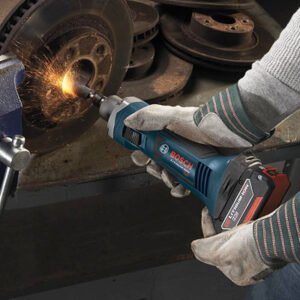
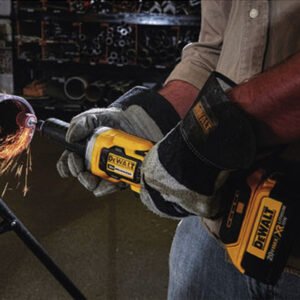
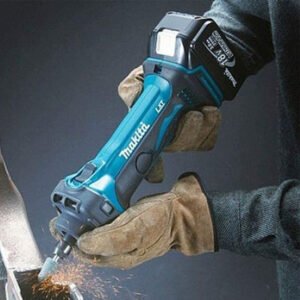
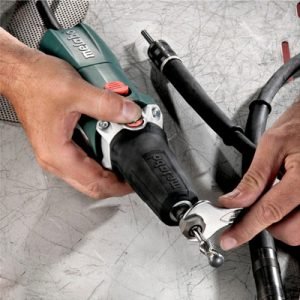
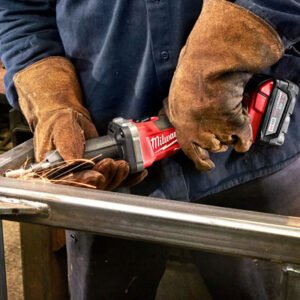


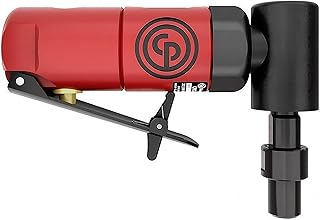


A cordless die grinder is a compact, high-speed rotary power tool designed for jobs such as grinding, deburring, polishing, sharpening, cleaning metal, removing rust, and working in areas where a larger grinder cannot easily fit. For Canadian buyers, the best choice is not necessarily the tool with the highest advertised speed. Battery platform, collet size, control, runtime, ergonomics, accessory compatibility, and the type of work you expect to perform can matter just as much.
The strongest options in this category generally come from established professional and DIY tool platforms such as DeWalt, Milwaukee, Makita, Bosch, Metabo HPT, and Ryobi. However, a familiar brand name alone does not make one model the right purchase. Compare the complete specification sheet, included accessories, battery configuration, warranty information, and verified customer feedback before deciding.
Unlike an angle grinder, which commonly uses a larger disc, a die grinder accepts small rotary accessories through a collet. This makes it particularly useful for precision work, internal surfaces, narrow openings, weld preparation, porting, deburring and detailed material removal.
Cordless operation adds another advantage: mobility. You can work away from a mains outlet, move around a vehicle or fabrication project more easily, and avoid dragging an extension cord through a workshop. The trade-off is that battery-powered models add weight and depend on compatible batteries and chargers.
Die grinders are high-speed tools, and rotational speed is one of their most important specifications. Higher RPM can be beneficial for certain small abrasive and polishing accessories, but maximum speed should never be treated as a universal measure of performance.
Different accessories have different maximum rated speeds. The accessory manufacturer's stated limit should always be respected, and the die grinder's speed should be appropriate for the accessory and material being worked.
Variable-speed control can make a cordless die grinder substantially more versatile. A lower setting may be preferable for delicate finishing, polishing, certain brushes or heat-sensitive work, while higher settings can be useful for suitable grinding applications.
When comparing models, look beyond the phrase “variable speed.” Check how the speed is controlled, whether the tool has several selectable settings, and whether the control is easy to operate while wearing work gloves.
The collet determines which shank sizes the grinder can securely accept. Common configurations include 1/4-inch and 1/8-inch options, although the exact arrangement varies by model.
A 1/4-inch collet is especially common for heavier-duty rotary accessories, while smaller shanks can be useful for detailed work. Before buying, check the included collets and determine whether the accessories you already own match the tool.
Voltage should be considered alongside the entire battery system rather than in isolation. A higher-voltage platform may offer a useful combination of power and runtime, but battery size also affects the overall weight and balance of the tool.
For buyers already invested in a cordless ecosystem, staying within that platform can reduce the total cost of ownership because existing batteries and chargers may be shared with other compatible tools.
Battery capacity is commonly expressed in amp-hours. Higher-capacity batteries can provide more energy between charges, but they are often larger and heavier. For detailed overhead work or jobs requiring frequent repositioning, a compact battery may provide a better balance even if it requires more frequent charging.
Die grinders are often held in one hand and manipulated close to the workpiece. Excessive weight can therefore become noticeable during repetitive work. Consider the bare-tool weight as well as the weight of the battery you intend to use.
Balance is equally important. A tool that feels well balanced around the grip can be easier to control than a heavier model with a front- or rear-heavy design.
Brushless motors are common in higher-end cordless power tools. They eliminate traditional carbon brushes and are generally associated with efficient motor designs, reduced routine brush maintenance, and strong electronic control.
That does not mean every brushed die grinder is unsuitable. For occasional household or hobby work, a less expensive brushed model can make sense. For frequent fabrication, automotive, maintenance or professional use, a brushless platform may justify its higher initial cost.
Modern cordless die grinders can include electronic controls designed to improve usability and protect the tool. Depending on the model, features may include variable-speed settings, electronic braking, overload protection, thermal protection, restart protection, and battery-management communication.
These features vary considerably between manufacturers and model generations. Do not assume that a feature available on one tool is automatically included on another tool from the same brand. Check the specifications for the exact model.
An electronic brake can reduce accessory coast-down after the trigger is released. This can be useful when moving quickly between work areas, although stopping behaviour varies by tool and operating conditions.
Grinding under heavy load can generate significant heat. Electronic protection systems may help prevent damage caused by excessive current or temperature, but they are not a substitute for using the correct accessory, avoiding excessive pressure, and allowing the tool to cool when necessary.
Grinding performance depends on much more than motor speed. The abrasive type, accessory diameter, material being removed, contact pressure, tool design, battery condition and operator technique all influence the result.
A high-RPM grinder with a poorly matched accessory can perform worse for a particular task than a more moderate tool paired with the correct abrasive. For this reason, evaluate the complete system rather than selecting a model solely because its headline specification is higher.
Look for good speed control, comfortable handling and compatibility with suitable carbide burrs, abrasive points or other approved accessories. Precise control can be more valuable than maximum power when removing small burrs from machined edges.
A die grinder can be useful for accessing welds and preparing or cleaning localized areas. Consider sustained-load capability, battery capacity, motor design and cooling when the tool will be used repeatedly on metal.
Wire wheels, abrasive brushes and related accessories can be effective for localized cleaning. Make sure the accessory is rated for the grinder's operating speed and installed according to the manufacturer's instructions.
Polishing applications often benefit from controllable speed. Excessive speed can generate heat or produce undesirable results with some polishing materials, so a grinder with useful low-speed control may be preferable to one designed primarily for maximum RPM.
A die grinder is only as useful as the accessories it can safely operate. Before purchasing, consider the types of burrs, grinding stones, sanding accessories, polishing tools and brushes you expect to use.
Automotive users often value compact dimensions, battery mobility and access to confined areas. A die grinder can be useful for cleaning localized rust, preparing weld areas, removing material, smoothing edges and working around components where a larger grinder is cumbersome.
For automotive work, pay particular attention to grip shape, switch placement, speed control, battery clearance and the ability to operate comfortably around awkward angles. If the tool will be used inside an engine bay or underneath a vehicle, compact overall dimensions can be more important than having the largest available battery.
Fabrication work can place substantially greater demands on a die grinder than occasional DIY projects. If you routinely grind welds, deburr cut edges or shape metal, prioritize sustained performance, motor durability, thermal management, accessory compatibility and battery availability.
A professional-oriented platform from Milwaukee, DeWalt or Makita may be attractive for users who already rely on that manufacturer's battery ecosystem. Bosch and Metabo HPT also offer cordless tool platforms that may be worth comparing depending on the exact model and application.
The best category depends on how the tool will actually be used. Buying a heavy-duty grinder for occasional deburring can result in unnecessary weight, while choosing a compact tool for continuous fabrication can lead to frustrating runtime and performance limitations.
A cordless die grinder should be treated as a high-speed cutting and grinding tool. The small size of the tool does not make it low risk. Rotating accessories can break, throw fragments, catch material or generate sparks and heat.
Maximum RPM is easy to compare, but it does not tell you how effectively the grinder maintains performance under load. Look at motor design, battery platform, control features and intended application as well.
Some cordless tools are sold as bare tools, while others may be available in kits. A seemingly inexpensive grinder can become a considerably larger purchase if you also need batteries and a charger.
Check your existing accessories before choosing the grinder. If most of your accessories use a particular shank size, compatibility should be one of the first specifications you verify.
The largest battery is not automatically the best battery. Additional capacity can increase runtime, but it also increases weight. A smaller pack can make sense when working overhead, inside tight spaces or during detailed operations.
A technically impressive grinder can still be a poor choice if the grip, trigger or battery arrangement makes it uncomfortable to control. Pay attention to the dimensions and weight of the complete tool rather than the bare-tool specification alone.
When comparing ten cordless die grinders, create a consistent checklist rather than judging each product from different criteria. The following factors provide a useful framework for commercial investigation.
For cordless power-tool users, the battery ecosystem can influence the true value of a die grinder more than a small difference in tool price. A buyer who already owns compatible DeWalt 20V MAX, Milwaukee M18, Makita 18V LXT, Bosch 18V, Metabo HPT MultiVolt or Ryobi ONE+ equipment may have a strong reason to stay within that ecosystem.
Platform compatibility should always be confirmed for the exact model. Batteries that share a brand name are not necessarily interchangeable across every generation, voltage class or product family.
Canadian product listings can differ in kit contents even when the underlying tool model appears identical. Before making a purchase, check the exact model number and determine whether the listing includes the grinder only, a battery, a charger, additional collets or other accessories.
Also compare whether the listed specifications refer to the bare tool or the complete configuration. Weight, runtime and overall handling can change significantly once a battery is attached.
Model numbers are more reliable than product titles when comparing listings. Retailer titles can use similar terminology for different configurations, generations or regional versions.
Warranty terms can vary by manufacturer, product family, region and purchase conditions. Review the manufacturer's current Canadian warranty documentation before purchase rather than relying on an informal marketplace description.
Verified customer reviews can reveal practical issues that specifications cannot fully communicate, such as perceived balance, switch usability, battery placement and suitability for particular workloads. However, reviews should be evaluated in context. A complaint from someone using a light-duty tool for continuous industrial grinding may not indicate a problem for the tool's intended application.
For light deburring and occasional polishing, prioritise control, compactness and comfortable handling. For regular grinding of harder materials, sustained performance and battery capacity become more important. Professional users should also consider the availability of replacement batteries, chargers and accessories within the selected platform.
Rather than asking which cordless die grinder is universally the most powerful, ask which model provides enough performance for your most demanding recurring job without adding unnecessary size or weight for everything else.
Runtime depends heavily on workload. Aggressive grinding, high material removal and sustained pressure consume more energy than intermittent polishing or deburring. Use the correct accessory and allow the abrasive to do the work instead of applying excessive force.
Keeping multiple compatible batteries available can also be more practical than relying on one high-capacity pack. For professional users, this allows one battery to charge while another is being used.
A cordless grinder is not automatically superior to a corded tool. If most of your work happens at a fixed bench with convenient electrical access, continuous mains power may be preferable. Corded tools can also avoid interruptions associated with battery changes.
For occasional mobile work, however, the convenience of cordless operation can outweigh those advantages. The decision should be based on where and how frequently the grinder will be used.
Professional-oriented cordless die grinders generally focus on durability, sustained workload capability, electronics, ergonomics and compatibility with broader trade-focused tool ecosystems. DIY-oriented products can offer an attractive balance when the tool is used less frequently and the workload is lighter.
There is no benefit in paying for capabilities that will never be used. Conversely, saving money on a light-duty tool can be a false economy if it is regularly subjected to demanding grinding work outside its intended use.
A die grinder can remain useful for years when the platform continues to support batteries, chargers and accessories. Consider the manufacturer's broader cordless range if you expect to purchase additional tools later.
A strong ecosystem can provide value through battery sharing, while established accessory availability can make it easier to maintain a consistent workflow. This is especially relevant for Canadian users who may prefer to standardize equipment rather than maintain several incompatible battery systems.
There is no single best model for every Canadian buyer. The right choice depends on the intended application, battery platform, required speed, collet size, runtime expectations, ergonomics and budget. A professional fabricator may need a substantially different tool from a homeowner who occasionally deburrs metal.
Many cordless models are designed for metalworking applications, but performance varies between models. For demanding work, compare motor design, battery platform, sustained-load capability, speed control and manufacturer-stated intended use rather than relying on voltage or RPM alone.
It can be worthwhile for frequent users who value efficiency, reduced brush maintenance and modern electronic control. Occasional users may find a less expensive brushed model sufficient for lighter applications.
Choose a collet that matches the accessories you intend to use. A 1/4-inch setup is common for many general-purpose die-grinder accessories, while smaller shanks may be preferable for certain precision applications. Always verify compatibility with the exact tool and accessory.
Usually not completely. The two tools serve overlapping but distinct purposes. An angle grinder is generally better suited to larger discs and broader material removal, while a die grinder excels at smaller accessories, detailed grinding and confined areas.
No. Maximum RPM is only one specification. Speed control, power under load, accessory compatibility, ergonomics, battery capacity and electronic protection can all be more important for a particular application.
If you already own compatible batteries and a charger, a bare tool may be the more economical configuration. If you are entering a battery platform for the first time, compare the combined cost of the tool, battery and charger against available kit configurations.
They are established cordless power-tool brands with broad product ecosystems, making them relevant choices to compare. Bosch, Metabo HPT and Ryobi are also worth considering depending on your intended workload, existing batteries and preferred price-to-feature balance. Always evaluate the exact model rather than assuming every tool within a brand has identical capabilities.
Depending on the tool and collet, compatible accessories may include mounted grinding points, carbide burrs, sanding accessories, polishing accessories and certain wire or abrasive brushes. Each accessory must be appropriate for the tool, application, material and permitted operating speed.
Inspect and clean the tool regularly, with frequency determined by how often it is used and the amount of dust or debris generated. Follow the manufacturer's maintenance instructions for the exact model, and inspect accessories before every use.
This guide is structured for Canadian buyers and focuses on factors relevant to purchasing cordless die grinders in Canada. Product specifications, kit contents, warranty terms, retailer availability and current prices can change, so verify the latest information before purchasing.
The best cordless die grinder is the one whose performance, battery system, ergonomics and accessory compatibility align with the work you actually perform. Start by identifying your primary applications, then narrow the choices by collet size, speed control, motor type, battery platform and tool weight.
For frequent professional use, prioritise durability, sustained performance, electronic protection and a well-established battery ecosystem. For occasional DIY work, a compact and affordable model may provide better overall value. If you already own compatible cordless tools, battery-platform compatibility can be one of the strongest reasons to choose one model over another.
Before buying, compare the exact model specifications, included equipment, current Canadian retailer listings, warranty information and verified customer feedback. This approach makes it easier to distinguish genuinely useful features from specifications that look impressive on paper but may have little relevance to your particular work.