

Explore cordless power tools, kits, batteries, chargers, accessories and related equipment available to Canadian shoppers. Compare product options and follow useful buying guides before you buy.
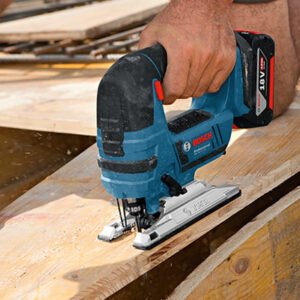
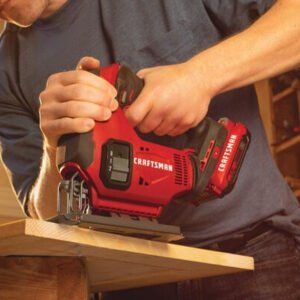
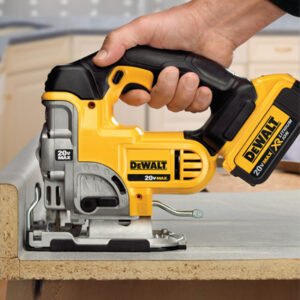
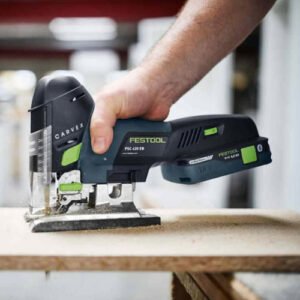
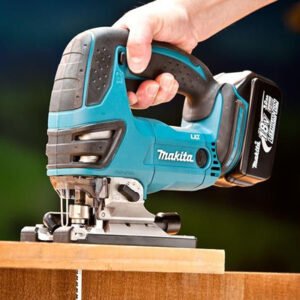
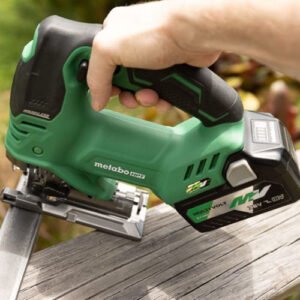
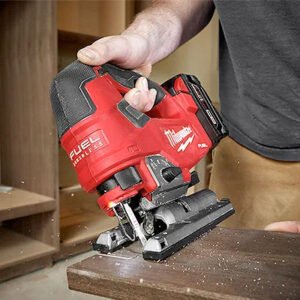


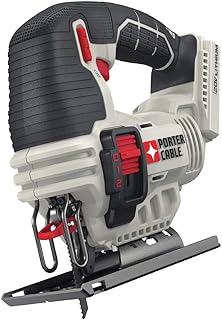


A cordless jigsaw can be one of the most versatile cutting tools in a workshop, renovation kit, or jobsite. Unlike a circular saw, it can start a cut through a drilled opening, follow curves, cut notches, and handle detailed shapes in sheet goods, solid wood, laminate, plastics, and—when fitted with the correct blade—certain metals. The absence of a power cord also makes it easier to work around cabinets, flooring, framing, shelving, and other areas where a cord can become an obstruction.
For Canadian buyers, however, choosing a cordless jigsaw is not simply a matter of selecting the model with the highest advertised speed. Battery-platform compatibility, stroke length, variable-speed control, orbital action, blade-changing design, visibility of the cut line, vibration management, dust extraction, ergonomics, and the type of material being cut can all have a noticeable effect on everyday usability.
The right choice therefore depends on the work you actually expect to do. A homeowner making occasional plywood cuts has different requirements from a renovation contractor cutting countertop openings every week. Someone already invested in a 20V or 18V battery platform may also get considerably more value from staying within that ecosystem rather than buying a tool that requires a new charger and battery family.
A well-designed cordless jigsaw should provide controlled cutting rather than simply maximum power. Important characteristics include a stable shoe, predictable trigger response, effective blade guidance, a secure blade-clamping system, useful speed adjustment, and an ergonomic grip that remains comfortable during longer cuts.
For cordless power tools, the battery system can matter almost as much as the tool itself. A jigsaw that uses batteries you already own may be considerably more practical than an otherwise comparable model that requires a separate battery platform.
Major cordless-tool ecosystems used by Canadian professionals and DIY users include DeWalt, Makita, Milwaukee, Bosch, and Ryobi, among others. These manufacturers offer broader families of cordless tools, although compatibility is specific to each manufacturer's battery system and generation. Batteries should never be assumed to be interchangeable simply because two tools have similar voltage labels.
Before purchasing a bare tool, check whether the listing includes a battery and charger. "Tool only" or "bare tool" generally means that the battery and charger are purchased separately. If you are starting from scratch, calculate the cost of the complete setup rather than comparing the advertised bare-tool prices alone.
Voltage is useful for identifying a battery family, but it is not a complete measure of jigsaw performance. Motor design, electronics, blade selection, mechanical efficiency, cutting technique, and battery condition all influence how a tool performs.
A higher-capacity battery can provide greater runtime, but it may also increase the overall weight of the tool. For overhead work or detailed cuts, a lighter battery may be preferable. For repeated cutting of thick material, a larger battery can be a more attractive choice if the additional weight is manageable.
Brushless motors have become increasingly common in cordless power tools. A brushless jigsaw can offer advantages in efficiency, motor design, electronic control, and potentially runtime, depending on the tool and workload.
That does not automatically make every brushless model the best choice. A brushed jigsaw may still be perfectly suitable for occasional household projects, particularly when its price and existing battery compatibility make it attractive. For frequent use, however, brushless technology is worth considering alongside ergonomics, cutting control, warranty terms, and the overall cordless platform.
The blade in a jigsaw moves rapidly up and down through a defined stroke. Stroke length and strokes per minute influence how quickly the tool can remove material, but faster is not necessarily better for every application.
Fast, aggressive cutting can be useful when rough-cutting construction timber or sheet material. Delicate materials, thin stock, laminates, and finish-sensitive work can benefit from more controlled settings. The ideal tool gives the operator enough adjustment to match the cutting action to the material.
Variable-speed control gives the user greater authority over the cutting process. Slower settings can be useful when starting a cut carefully or working with materials that can be damaged by excessive heat or aggressive cutting. Higher speeds may be appropriate for many wood-cutting applications when paired with a suitable blade.
Speed should always be selected according to the blade manufacturer's recommendations and the material being cut. A premium jigsaw cannot compensate for an inappropriate blade or excessive cutting pressure.
Many jigsaws include selectable orbital action. In a conventional reciprocating motion, the blade primarily travels vertically. Orbital action adds forward movement to part of the blade's cutting cycle, making the cutting action more aggressive.
This can be advantageous when speed is more important than the smoothest possible cut. However, aggressive orbital settings can produce a rougher finish and may not be desirable for delicate or finish-critical work.
The jigsaw itself is only half of the cutting system. Blade design has a major effect on speed, finish quality, durability, and material compatibility.
Many modern cordless jigsaws use a T-shank blade system, which has become common across a wide range of professional and DIY jigsaws. Always verify the blade interface required by the particular tool before buying replacement blades.
Wood blades are available in different tooth configurations. Coarser teeth can remove material rapidly, while finer teeth can provide cleaner cuts in suitable applications. Long blades can be useful for thicker stock, but excessive blade length can reduce control.
For plywood and other sheet goods, a blade designed specifically for clean sheet-material cuts can be preferable to a general-purpose construction blade. For curved work, a narrower blade can often follow a tighter radius more effectively.
Metal requires blades designed for metal rather than ordinary wood-cutting blades. Fine teeth are commonly used for metal-cutting applications, and the correct blade speed and technique are important for controlling heat and wear.
Always check the tool and blade manufacturer's guidance before cutting metal. The maximum material thickness and recommended cutting conditions can vary substantially.
Special-purpose jigsaw blades are available for materials such as laminate, plastics, plywood, hardwood, and other applications. Choosing the blade according to the material is often one of the simplest ways to improve results without changing the power tool.
Manufacturers commonly provide maximum cutting-capacity figures for materials such as wood and steel. These figures are useful for establishing the general capability of a tool, but they should not be treated as a guarantee of ideal performance in every situation.
Actual cutting behaviour depends on the material, blade type, blade condition, grain direction, thickness, feed pressure, battery state, and whether the cut is straight or curved. A tool capable of cutting a particular thickness may not be the best option if that thickness is encountered frequently.
If your projects routinely involve thick hardwood, dense construction materials, or long continuous cuts, consider the overall design of the jigsaw and its battery system rather than relying solely on the headline cutting-capacity figure.
A jigsaw with an adjustable shoe can be used for angled cuts, subject to the tool's specified adjustment range. This can be useful for trim, joinery, angled openings, and certain woodworking projects.
A sturdy shoe is important because it supports the tool against the workpiece. If the shoe moves unexpectedly or the adjustment mechanism is difficult to secure, maintaining a consistent bevel angle becomes harder.
When comparing models, look for a shoe adjustment system that is easy to understand and securely locks into position. If bevel cutting is part of your regular workflow, this feature deserves more attention than it would for someone who makes only occasional straight cuts.
Jigsaws can create substantial vibration and sawdust directly around the blade. A design that gives the operator a clear view of the blade and cutting line can make accurate work easier.
LED lighting is useful when the workpiece or surrounding area is poorly illuminated. However, lighting cannot replace good workshop lighting, accurate marking, and correct positioning of the jigsaw.
Blade visibility is particularly important when cutting curves, following templates, or making openings where the final shape needs to remain within a marked boundary.
Cutting wood and sheet materials produces dust that can obscure the cut line and spread around the work area. Some jigsaws provide provisions for dust extraction or collection systems.
For indoor renovation work, a compatible extraction setup can be especially useful. The exact effectiveness depends on the jigsaw, extraction equipment, blade, material, and cutting technique. Dust management should also follow appropriate workplace and material-safety guidance.
A jigsaw may look compact in a product photograph but feel very different after several minutes of continuous cutting. Grip shape, trigger placement, balance, vibration, weight, and battery position all affect handling.
Consider how you normally hold the tool. A compact top-handle design may appeal to users who want a familiar jigsaw grip, while a barrel-grip configuration can suit users who prefer to control the tool differently. Neither design is universally superior; hand size, cutting position, and personal preference matter.
Battery placement can also influence balance. A large battery mounted toward the rear may make a tool feel different from a compact battery configuration. If you frequently make detailed curves, control and balance may be more important than maximum runtime.
A cordless jigsaw should be treated as a serious cutting tool. Useful design features can include a lock-off mechanism, effective blade guard arrangements, a stable shoe, secure blade retention, and controls that are easy to operate without changing hand position unnecessarily.
Brand selection can be useful when choosing a cordless jigsaw because it determines the available battery ecosystem, accessory range, replacement parts, service arrangements, and the broader selection of compatible tools.
DeWalt is a major professional power-tool brand with a broad cordless ecosystem. Buyers considering a DeWalt jigsaw should compare the specific model's grip design, brushless motor configuration, speed control, orbital settings, included accessories, and battery requirements rather than assuming all models offer the same features.
Makita has a substantial cordless tool range and is particularly relevant to buyers who already use its battery platform. When comparing Makita jigsaws, pay attention to the intended application, handling characteristics, blade-changing system, speed adjustment, and the battery configuration required by the specific model.
Milwaukee's cordless system is widely used in professional applications. Its jigsaw options can be worth comparing for buyers already invested in the company's compatible battery ecosystem. As with other brands, the exact model specification matters more than the brand name alone.
Bosch has long been associated with woodworking and power-tool products. Its jigsaws are worth considering when cut quality, handling, blade control, and woodworking-oriented features are priorities.
Ryobi is particularly relevant for DIY users who value a broad cordless platform and want one battery family to support numerous household and workshop tools. Compare the individual jigsaw's cutting controls, ergonomics, included equipment, and intended workload before making a decision.
Metabo HPT offers cordless power tools aimed at users who want a broader professional-oriented tool ecosystem. Buyers should compare the specific jigsaw's motor technology, battery compatibility, control layout, cutting features, and overall handling with competing models.
A professional user may prioritise durability, sustained performance, ergonomics, battery availability, serviceability, and compatibility with an established tool platform. A homeowner may place more emphasis on affordability, simplicity, occasional-use performance, and whether the complete kit includes everything needed to begin cutting.
There is no universal advantage to spending more. A professional-grade jigsaw can be unnecessary for a person who expects to make a handful of cuts each year. Conversely, repeatedly using an inexpensive tool for demanding renovation work can make the initial saving less meaningful if the tool lacks the control, durability, or ergonomics required for the workload.
A circular saw is generally a stronger choice for long, straight cuts in sheet goods and lumber, but a jigsaw has a different role.
A jigsaw is versatile, but it should not be treated as a replacement for every saw. If your main task is ripping large sheets of plywood in long straight lines, a circular saw or track saw may be more appropriate. For very thick timber, a reciprocating saw may be more practical in some rough-cutting situations. For extremely precise woodworking, a band saw, scroll saw, or other specialised machine may offer better control depending on the project.
A low bare-tool price can be misleading when the buyer does not already own a compatible battery and charger. Compare the complete cost of the tool, battery, charger, and any essential accessories.
Voltage does not provide enough information to determine overall cutting performance. Examine motor technology, control features, stroke characteristics, ergonomics, and the intended application.
Blades are consumable accessories. A jigsaw becomes much more useful when you have suitable blades for the materials you actually cut. Budget for quality replacement blades rather than expecting one general-purpose blade to handle everything.
Fast cutting is not always accurate cutting. If you make visible finish cuts, curves, or detailed openings, control and blade visibility may be more valuable than maximum aggressiveness.
Weight becomes increasingly noticeable during repeated cuts, overhead work, or detailed projects. Consider the combined weight of the tool and battery rather than the tool body alone.
Different materials demand different blades and cutting techniques. A jigsaw chosen for occasional plywood work may not be the best choice for frequent thick hardwood or metal cutting.
For a meaningful comparison, create a shortlist based on the features that matter to your workload instead of comparing marketing language.
Plywood cutting often benefits from a blade designed for clean sheet-material cuts, good visibility around the blade, and controlled speed. If the visible surface must remain clean, blade selection and cutting direction deserve particular attention.
For repeated plywood work, also consider battery endurance and ergonomics. A jigsaw that is comfortable to operate can be more useful than a model that offers impressive specifications but is tiring to control during multiple cuts.
Hardwood can place greater demands on the blade and motor. A sharp, appropriate blade is essential, and excessive feed pressure can reduce cutting quality and increase stress on the tool.
Users who routinely cut dense hardwood should pay particular attention to cutting capacity, motor design, speed control, battery system, vibration, and the availability of blades intended for hardwood applications.
Laminate surfaces can be prone to chipping or cosmetic damage. A blade designed for fine, clean cutting can be preferable, while careful support of the workpiece can help maintain control.
When appearance matters, test the chosen blade and technique on a scrap piece before making the final cut. This can reveal whether the blade, cutting direction, speed, and support method are appropriate for the material.
Countertop openings require careful measurement because the cut is usually visible and must accommodate another component precisely. A jigsaw can be useful for curved or internal openings when used with an appropriate blade and setup.
Mark the opening carefully, confirm the dimensions against the component being installed, support the material properly, and create any required starter holes according to the cutting plan. Before cutting, check the underside and surrounding area for anything that could interfere with the blade.
Although a jigsaw can make straight cuts, the narrow blade can deflect if the user pushes too hard or the material is difficult to cut. Better results usually come from allowing the blade to do the cutting while maintaining steady forward movement.
Curved cutting is one of the main reasons to own a jigsaw. For tight curves, use a suitable narrow blade and avoid attempting to turn the tool faster than the blade can comfortably follow the marked line.
Sharp changes of direction can cause the blade to bind or deflect. Smooth hand movement, appropriate speed, and a suitable blade generally provide better results than forcing the jigsaw around a curve.
Routine maintenance helps preserve cutting performance and safe operation. Always follow the maintenance instructions supplied with the specific tool.
Battery-powered tools should be stored in accordance with the battery manufacturer's recommendations. Avoid exposing batteries to conditions outside their specified storage range, and inspect them for damage before use.
Keeping the jigsaw clean and protecting the blade area from unnecessary impacts can also help preserve the tool between projects. If the tool will remain unused for an extended period, follow the manufacturer's guidance for battery storage and charge level.
Two jigsaws with similar tool specifications can have different package contents. One may be sold as a bare tool, while another may include one or more batteries, a charger, blades, a carrying case, or other accessories.
When comparing listings, read the package contents carefully. A lower-priced tool may not be the better overall value if essential accessories must be purchased separately.
Customer ratings can be useful, but a single overall score does not tell you whether a jigsaw is appropriate for your particular application. Read reviews for recurring comments about the specific attributes that matter to you.
Look for patterns across multiple reviews rather than basing a purchase on one unusually positive or negative comment. Also distinguish verified-purchase feedback and detailed usage descriptions from reviews that provide little information about actual use.
Prioritise ease of use, reasonable weight, battery availability, and straightforward controls. If you already own a compatible cordless platform, choosing a bare tool from that ecosystem can make practical sense.
Cut quality, blade selection, speed control, low vibration, and visibility can be more important than maximum cutting aggression. A tool that gives you precise control is valuable when cuts remain visible in the finished project.
Consider durability, battery capacity, ergonomics, dust management, cutting versatility, and the availability of compatible accessories. Repeated use makes balance and vibration substantially more important than they may seem during a short demonstration.
Battery-platform consistency, runtime, durability, service considerations, tool balance, and compatibility with other jobsite equipment should all be evaluated. If the jigsaw is used frequently, small ergonomic differences can have a larger practical impact over time.
The purchase price is only one part of the cost of owning a cordless jigsaw. A realistic comparison can include the tool, compatible battery, charger, blades, storage, and replacement accessories.
If you already own several compatible batteries, the calculation changes significantly. In that situation, a bare tool from the same platform may be more economical than purchasing a complete kit. If you are entering a new battery ecosystem, compare the cost of the entire system rather than the jigsaw alone.
Suppose two jigsaws offer broadly similar cutting features, but one works with batteries already used by your drill, impact driver, reciprocating saw, and other tools. The compatible model may offer a much simpler ownership experience.
Shared batteries can reduce the number of chargers and battery types in the workshop and make it easier to keep several tools operational. This is particularly relevant for users who are gradually building a cordless collection.
Corded jigsaws can remain attractive when the user has continuous access to mains power and wants to avoid battery charging or battery management. Cordless models provide greater mobility and can be particularly convenient for installation and renovation work.
The choice is less about one format being universally superior and more about the environment in which the tool will be used. For occasional stationary workshop work, a corded model may be perfectly practical. For work that moves around a property or jobsite, cordless convenience can be a significant advantage.
There is no single best cordless jigsaw for every Canadian buyer. The best option depends on your battery platform, materials, cutting style, workload, budget, and preference for features such as brushless motors, orbital action, variable speed, low vibration, and tool-free blade changes.
A brushless model can be a strong choice for frequent users because brushless motor systems can offer efficiency and advanced electronic control. For occasional DIY work, however, a suitable brushed model may provide sufficient performance at a lower overall cost.
Many cordless jigsaws are designed for wood cutting, including demanding woodworking applications. Performance depends on the particular tool, battery, blade, material thickness, and cutting technique. Use a blade specifically suited to the hardwood and follow the manufacturer's cutting recommendations.
Some jigsaws can cut certain metals when equipped with the correct metal-cutting blade and operated according to the manufacturer's specifications. Do not assume that a wood-cutting blade or a general-purpose setting is suitable for metal.
No. Batteries are generally tied to specific manufacturer platforms and tool families. Similar voltage ratings do not make batteries universally compatible. Confirm compatibility before purchasing a battery or bare tool.
Not necessarily. A higher-capacity battery can be useful for extended cutting, but it can also add weight. For short or detailed tasks, a smaller compatible battery may offer a better balance between runtime and handling.
Use a blade specifically designed for plywood or clean sheet-material cutting when finish quality matters. Tooth configuration, blade width, cutting direction, and material thickness should all be considered.
Blade wandering can result from excessive feed pressure, a dull or inappropriate blade, material characteristics, insufficient support, or attempting to cut beyond the tool or blade's practical capability. Let the blade establish the cut rather than forcing the tool through the material.
Yes, provided the user understands the operating instructions and basic cutting safety. Beginners should start with scrap material, use an appropriate blade, secure the workpiece, and practise controlling the tool before making an important finished cut.
Orbital adjustment is useful when you want to change between more aggressive cutting and more controlled cutting. It is particularly worthwhile if the jigsaw will be used for a variety of materials and applications.
Neither should be considered in isolation. Cutting capacity indicates what the tool is designed to handle, while speed control affects how effectively you can adapt the cutting action. For versatile DIY and woodworking use, a good combination of capacity, control, and appropriate blades is usually more useful than maximising one specification.
There is no universal replacement interval. Replace a blade when it becomes dull, damaged, difficult to control, or produces noticeably poorer cutting results. Material type and cutting frequency strongly affect blade life.
No. Different materials require different blade designs. Using the correct blade for wood, plywood, laminate, plastic, or metal can improve both cutting performance and safety.
The strongest cordless jigsaw choice is the one that matches the way you actually work. For many buyers, battery-platform compatibility will be the first major decision. From there, focus on control, blade compatibility, ergonomics, cutting capacity, speed adjustment, orbital action, visibility, and the accessories required for your projects.
DeWalt, Makita, Milwaukee, Bosch, Ryobi, and Metabo HPT are among the established brands worth comparing, but the best purchase should be based on the specifications and package contents of the individual model rather than brand reputation alone.
Before purchasing, compare current Canadian listings carefully, confirm whether the battery and charger are included, check the manufacturer's specifications, read detailed verified customer feedback, and make sure the selected blades match the materials you intend to cut. A thoughtful comparison can help you avoid paying for features you will never use while ensuring that the jigsaw you choose has the control, compatibility, and capability required for your work.