

Explore cordless power tools, kits, batteries, chargers, accessories and related equipment available to Canadian shoppers. Compare product options and follow useful buying guides before you buy.
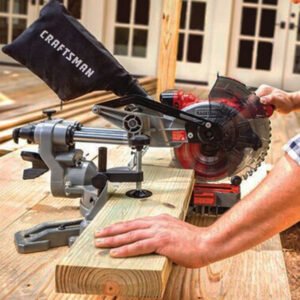
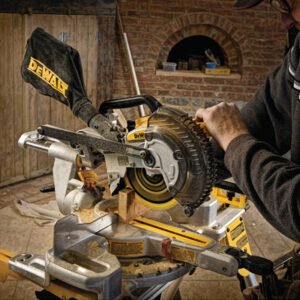
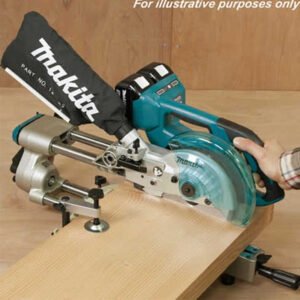
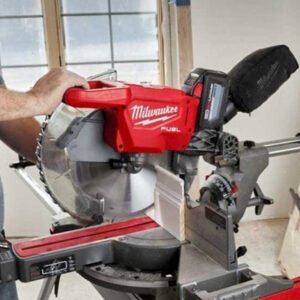



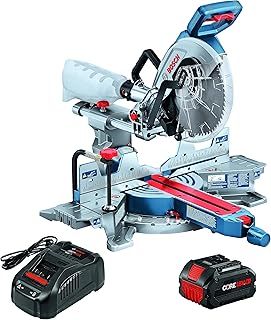
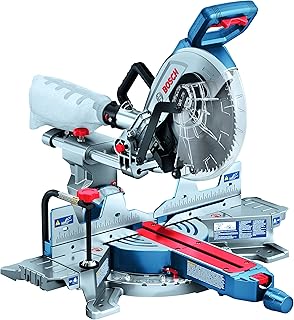
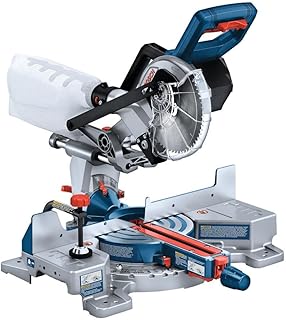
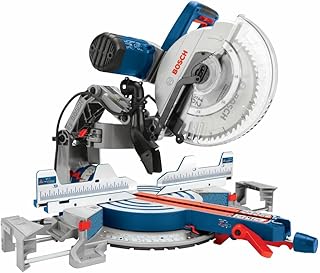


A cordless mitre saw can be an excellent choice for renovation work, trim installation, framing, flooring, cabinetry, deck projects and general woodworking where portability matters. Unlike a corded model, a battery-powered saw can be moved around a job site without locating a power outlet or managing an extension cord. That convenience becomes particularly useful when working outdoors, in unfinished buildings, or in rooms where access to mains power is limited.
However, cordless mitre saws are not interchangeable. Blade diameter, cutting capacity, battery platform, motor technology, bevel and mitre adjustment, dust collection, portability and included accessories can make a substantial difference in everyday use. The best model for a professional carpenter may not be the best choice for a homeowner who uses a saw occasionally.
When comparing cordless mitre saws in Canada, consider the complete system rather than focusing on one specification. A saw with a larger blade may offer greater cutting capacity, for example, while a compact model can be much easier to transport and store. Likewise, a bare-tool price can look attractive until the cost of the compatible battery and charger is included.
Blade diameter is one of the first specifications to check. Common cordless mitre saw categories include compact 7-1/4-inch or 8-1/2-inch models and larger 10-inch and 12-inch saws. The appropriate size depends on the material dimensions you expect to cut.
A compact saw can be convenient for trim, moulding, small boards and light renovation work. A 10-inch or 12-inch model generally provides a larger cutting envelope and may be more appropriate for substantial dimensional lumber, wider boards and professional applications. The blade diameter alone, however, does not tell you the complete story.
Two saws using the same nominal blade diameter can have different maximum crosscut and compound-cut capacities. Always compare the manufacturer's stated cutting capacity at common angles, including 90-degree crosscuts and 45-degree mitre cuts. If you regularly work with wide boards, also examine whether the saw has a sliding mechanism and how far the rails travel.
A non-sliding mitre saw is generally more compact because the blade assembly pivots without travelling forward and backward on rails. This can make it attractive for simple crosscutting and trim work.
A sliding mitre saw adds a forward-and-backward cutting motion. This allows the blade to reach farther into wider material and is often preferable when cutting wider boards. The trade-off is additional size, weight and mechanical complexity.
For buyers with limited workshop space, a compact non-sliding model may be easier to live with. For renovation, construction or woodworking projects involving wider stock, a sliding design can provide considerably more versatility.
Battery compatibility deserves special attention because it can influence both the initial purchase and the long-term cost of ownership. If you already own cordless tools, staying within the same battery ecosystem can be a major advantage.
Popular professional and consumer tool platforms include DeWalt, Makita, Milwaukee and Ryobi. Bosch also offers cordless power-tool systems. Each manufacturer uses its own battery ecosystem, so a battery from one platform should not be assumed to work with another manufacturer's tool.
Before buying a bare cordless mitre saw, check whether the listing includes a battery and charger. If it does not, calculate the complete system cost before comparing it with a kit that includes both. Buyers who already have compatible batteries may find a bare tool particularly attractive, while someone entering a new platform needs to budget for everything required to operate the saw.
Battery voltage can provide useful context, but it should not be treated as a simple measure of cutting performance. Motor design, battery capacity, blade condition, material, cutting technique and workload all influence how a cordless saw performs.
Higher-capacity batteries can provide more available energy, but they may also add weight. A larger battery can therefore be useful for demanding work while being less appealing when portability is the priority.
For occasional home use, one compatible battery may be sufficient. Contractors who use the saw continuously may prefer several batteries so one can be charging while another is in service. If you are comparing a cordless mitre saw for a full workday, consider the entire battery strategy rather than relying on a claimed runtime figure.
Brushless motor technology is common in modern cordless power tools and is particularly relevant to buyers who expect frequent use. A brushless motor eliminates the conventional brushes used in brushed motor designs and can offer advantages in efficiency, electronic control and maintenance requirements.
Brands such as DeWalt, Makita, Milwaukee and Bosch have brushless cordless tool ranges, although the exact motor technology and electronic controls vary by model.
Do not select a saw solely because its product title contains the word “brushless.” Look at the complete specification, including cutting capacity, blade speed, battery compatibility, weight and adjustment features. A well-matched saw should be evaluated as an entire tool rather than by one marketing term.
The adjustment system determines how easily you can produce angled and compound cuts. A mitre adjustment changes the horizontal angle of the cut, while the bevel adjustment tilts the blade to create a compound angle.
For basic crosscutting, an uncomplicated mitre adjustment may be sufficient. Trim carpenters, flooring installers and woodworkers may benefit from a broader range of adjustments and clearly defined positive stops.
Positive stops allow the saw to settle into commonly used angles. These can make repeated cuts faster because you do not need to measure and manually set every angle from scratch.
When comparing models, look for:
If your work includes crown moulding, picture frames, cabinetry or complex trim, the quality of the adjustment system can matter as much as raw motor power.
A single-bevel saw tilts in one direction. A dual-bevel saw can tilt in both directions, reducing the need to reposition the workpiece when making matching compound cuts.
Single-bevel models can be perfectly adequate for straightforward projects and may appeal to buyers who want a simpler or more compact tool. Dual-bevel models are often more convenient for repetitive trim work and complex compound cuts.
If you frequently cut mouldings, door casings or other pieces that require mirrored angles, a dual-bevel mechanism can save setup time. If your typical work consists of ordinary 90-degree crosscuts and occasional mitre cuts, the additional capability may be less important.
A mitre saw needs to do more than cut quickly. It should allow you to establish an angle and reproduce that angle consistently. Accuracy depends on the complete mechanical system, including the fence, blade, pivot mechanism, adjustment controls and work support.
A rigid fence is particularly important when cutting longer or wider pieces. If the workpiece moves against the fence during the cut, even a powerful motor cannot compensate for poor positioning.
Buyers should therefore examine how the fence is designed, how the material is supported and whether the adjustment system is easy to lock securely. For precision woodworking, the ability to make small adjustments can be more valuable than an impressive maximum-speed specification.
Long boards can be awkward to handle on a compact saw. Integrated or compatible extensions can make a major difference by keeping material level with the cutting surface.
When evaluating a saw, consider the width and height of the fence, the available support area and whether additional stands or extensions can be used. If you frequently cut long trim, baseboard, framing lumber or decking material, a stable work-support setup should be part of your buying decision.
Do not confuse a large cutting capacity with adequate workpiece support. A saw may technically accommodate a wide board while still requiring additional support to handle that board safely and consistently.
Dust management is an important consideration for both convenience and workshop cleanliness. Mitre saws naturally produce a substantial amount of sawdust because the blade is exposed while cutting.
Many models include a dust bag or dust port for connection to a compatible vacuum system. The effectiveness of collection varies with the saw's design, blade geometry, material and vacuum setup.
For indoor woodworking, look closely at the dust-port arrangement and whether your existing extraction equipment can connect conveniently. A dust bag may be sufficient for occasional outdoor work, but a workshop user may prefer a saw that works well with a suitable dust extractor or shop vacuum.
Dust collection should not be considered a substitute for appropriate personal protective equipment or safe workshop practices. Fine wood dust can be a respiratory irritant, so users should follow the tool manufacturer's safety instructions and use appropriate dust-control measures for their environment.
One of the biggest advantages of cordless equipment is freedom from a power cord, but that does not automatically mean every cordless mitre saw is easy to carry.
Large sliding saws can be heavy because they combine a substantial motor, rails, base and cutting mechanism. Compact saws generally prioritize transportability and smaller workpieces.
Think about how often you will carry the saw. A workshop-based buyer may prefer greater capacity even if the machine is heavy. A contractor who moves between rooms, vehicles and job sites may place considerably more value on a manageable weight and integrated carrying handle.
Battery weight should also be considered. The total carrying weight includes the saw and installed battery, not simply the bare-tool specification.
A compatible mitre-saw stand can improve stability, material support and portability. Some users mount the saw permanently on a workbench, while others need a folding stand that can be transported to different locations.
Before purchasing a stand, confirm that its mounting system is compatible with the saw. Also consider the maximum supported workpiece length and the available extension system.
A good stand should make the complete cutting setup easier to use rather than merely raising the saw off the floor. For frequent construction work, the stand can be almost as important to productivity as the saw itself.
The blade has a direct influence on cut quality. A cordless mitre saw can only perform as well as the blade and setup allow, so buyers should consider the types of blades appropriate for their work.
Blades differ in tooth count, tooth geometry, kerf, material and intended application. A blade designed for fast framing cuts may not produce the same finish as a fine-tooth blade intended for trim or woodworking.
Higher tooth counts can be useful when a smoother finish is important, while coarser blades may be appropriate when speed is the priority. The correct choice depends on the material and desired result.
Check the saw's required blade diameter and arbor specification before purchasing replacement blades. Never assume that any blade of the same diameter is automatically compatible.
For baseboards, casings, mouldings and other finish work, accuracy, smooth adjustment and cut quality tend to matter more than maximum cutting capacity.
A trim-focused buyer should pay particular attention to:
A compact cordless saw can be especially useful when installing trim in occupied homes because the absence of a power cord can simplify movement between rooms. However, the saw should still be paired with appropriate support and dust-control equipment.
Construction users often prioritize cutting capacity, durability, battery compatibility and transportability. The ideal configuration depends on whether the saw is used primarily for dimensional lumber, repeated framing cuts, decking, renovation work or a mixture of applications.
For heavier workloads, buyers should pay close attention to the battery system, motor design, maximum cutting dimensions and the availability of replacement blades and compatible batteries through the chosen tool ecosystem.
A robust professional-oriented platform can make sense for users already invested in a contractor-grade battery system. For occasional DIY projects, paying a premium for features designed around intensive daily use may not provide equivalent value.
Homeowners do not necessarily need the largest or most powerful saw available. For occasional shelves, framing repairs, garden projects, trim installation and general woodworking, a compact or mid-size cordless model may provide a more practical balance of capability, storage requirements and cost.
Start by identifying the largest material you expect to cut. If your projects rarely exceed the capacity of a compact saw, there may be little benefit in carrying a much larger machine.
Also consider whether you already own compatible batteries. If your existing cordless tools use a platform from DeWalt, Makita, Milwaukee, Bosch or Ryobi, choosing a mitre saw from that ecosystem may reduce the need to maintain another charger and battery family.
Canadian users may encounter working conditions that differ significantly from those in mild climates. Cold temperatures can affect battery performance, while snow, moisture and condensation can create additional equipment-management challenges.
Follow the battery manufacturer's instructions for operating and storing batteries in cold conditions. Avoid exposing batteries or electrical equipment to moisture beyond the conditions specified by the manufacturer.
If a cordless mitre saw is regularly transported between a heated vehicle or workshop and a cold outdoor environment, allow equipment to reach appropriate operating conditions before use and protect it from precipitation. Good storage practices can be particularly important during Canadian winters.
Battery care affects the practical usefulness of a cordless tool system. Use the charger specified for the battery platform and follow the manufacturer's instructions for storage, charging and temperature limits.
Keep batteries away from excessive heat, moisture and physical damage. If a battery shows signs of damage or abnormal behaviour, discontinue use and follow the manufacturer's safety guidance.
For frequent users, having multiple batteries can be more useful than buying a saw with the largest possible battery. A rotation system can keep a working battery available while another is being charged, provided the batteries and charger are designed for that purpose.
Safety should be part of the comparison process rather than an afterthought. Cordless operation removes the possibility of cutting through an extension cord, but a mitre saw remains a powerful cutting machine and requires careful operation.
Look for features such as an effective blade guard, a secure trigger arrangement, a stable base and a mechanism that holds the workpiece securely. Read the manufacturer's safety instructions before operating the saw.
Basic safe-use principles include:
A 12-inch saw is not automatically the best choice for every buyer. Larger machines can provide greater capacity but may require more storage space and be harder to transport.
A bare tool is only useful if you already own a compatible battery or are prepared to purchase one. Compare the complete operating setup rather than the bare-tool price alone.
Extra capacity and power are useful only when your projects require them. For occasional trim work, a heavy professional saw may be unnecessarily cumbersome.
Long boards need stable support. If the saw does not provide enough support on its own, budget for extensions or a suitable stand.
The factory-installed blade may not be the ideal blade for every material. Consider the finish and cutting speed you actually need.
Maximum speed, cutting capacity and battery size are useful specifications, but they do not replace an assessment of accuracy, ergonomics, portability, adjustment quality and compatibility with your existing tools.
When two models appear similar, use a consistent comparison framework. Start with the dimensions and material you need to cut, then work through the mechanical and cordless-tool features.
Several established manufacturers have cordless ecosystems that may be relevant when comparing mitre saws in Canada. DeWalt, Makita, Milwaukee, Bosch and Ryobi are among the brands buyers may encounter when researching cordless woodworking and construction tools.
The most important question is not which brand name sounds best. Instead, consider which platform fits your existing tools, battery needs, expected workload and preferred level of equipment.
For someone already using several cordless tools from one manufacturer, staying within that ecosystem can simplify battery management. A buyer starting from scratch has more flexibility and can compare the complete cost and specifications of each platform.
A bare tool includes the saw without the battery and charger. A kit normally includes some combination of the saw, battery and charger. The exact contents vary, so read the listing carefully before purchasing.
A bare tool can be the better option when you already have multiple compatible batteries. It avoids paying for another charger or battery that you may not need.
A kit can be more convenient for a buyer entering a new cordless platform. The key is to compare the total package rather than assuming that one format is automatically cheaper.
Online product listings can contain several versions of what appears to be the same saw. Model numbers, kit configurations, regional packaging and included accessories may differ.
Before making a purchase, verify the exact model number and package contents. Pay attention to whether the listing refers to the bare tool or a kit and whether the stated battery capacity applies to the included battery or to a separately available option.
Also compare the manufacturer's specification information with retailer listings when important details appear unclear. Independent buying guides can help narrow the field, but the final product configuration should always be confirmed before ordering.
Customer reviews can provide useful information, but they are most valuable when read selectively. Look for repeated comments about specific characteristics rather than relying on a single enthusiastic or negative review.
Useful review themes include long-term adjustment stability, ease of carrying, dust collection, battery consumption, fence design, stand compatibility and the practicality of changing blades.
Be cautious about reviews that discuss a different model, a different kit configuration or a product purchased many years earlier. Product listings can change, so confirm that the review actually applies to the model and configuration being considered.
Routine maintenance helps keep a mitre saw accurate and ready for use. Always disconnect the battery before carrying out maintenance or adjustments that require the saw to be inactive, and follow the manufacturer's instructions.
Accumulated sawdust can interfere with adjustment mechanisms, dust collection and moving components. Clean the saw regularly using methods recommended by the manufacturer.
A dull, damaged or inappropriate blade can reduce cut quality and increase the effort required during cutting. Replace blades according to the manufacturer's guidance and the condition of the blade.
Periodically inspect accessible fasteners, fences and adjustment mechanisms. If the saw develops unusual movement or loses its expected alignment, stop using it until the issue has been investigated and corrected according to the manufacturer's instructions.
Store batteries and chargers in suitable conditions and keep battery contacts clean and protected. Use only compatible charging equipment specified for the battery platform.
Cordless operation is convenient, but there are situations where a corded mitre saw remains a sensible choice. If the tool will stay permanently in a workshop with reliable mains power, the portability benefit may be less important.
Users who make continuous, high-volume cuts may also prefer a corded setup if managing battery charging would be inconvenient. A corded model can eliminate battery scheduling altogether, although it introduces the need for suitable electrical access and cord management.
The right decision depends on how and where the saw will be used. Cordless is primarily about mobility and convenience; corded operation can make sense when continuous workshop availability is more important.
A compact cordless mitre saw can be the more practical choice when storage space, transport and small-to-medium workpieces are the main considerations. It can also be easier to position in a confined renovation environment.
Do not automatically move up to a larger blade simply because it offers more theoretical capacity. Consider whether your normal materials actually require that capacity. Smaller equipment can reduce the physical burden of transporting and storing the tool.
A larger sliding saw becomes more compelling when your projects regularly involve wide boards, substantial framing material or complex compound cuts. The added capacity can reduce the need for multiple cutting passes or alternative tools.
The trade-off is size and weight. Measure your available storage and transport space before choosing a large saw, particularly if the tool will be moved frequently.
The saw itself is only one part of a useful cutting station. A practical setup may include the saw, compatible batteries, an appropriate charger, spare blades, workpiece clamps, material supports, a stand and suitable dust-control equipment.
For mobile work, organize these components so that the saw can be transported without unnecessary loose accessories. For workshop use, prioritize stable mounting and repeatable workpiece support.
If you cut long boards regularly, investing in proper support can improve the overall experience more than upgrading from one otherwise similar saw to another.
The cheapest cordless mitre saw is not necessarily the lowest-cost option over its useful life. Consider the price of batteries, chargers, replacement blades, stands and other accessories required for your projects.
Likewise, a more expensive model can represent better value when its additional capacity or features directly solve a recurring problem. The objective is to pay for capabilities you will actually use rather than specifications that remain unused.
A useful value comparison therefore considers total setup cost, expected workload, portability, cutting capacity, battery ecosystem and the quality of the adjustment system.
There is no single best cordless mitre saw for every Canadian buyer. The right choice depends on cutting capacity, portability, battery platform, project type, budget and how frequently the saw will be used. A professional contractor may prioritize a durable high-capacity system, while a homeowner may prefer a compact saw that is easier to store and transport.
Modern cordless mitre saws can be suitable for many professional applications, but suitability depends on the specific model, battery system, material and workload. Compare the manufacturer's stated capabilities with the demands of your projects rather than assuming that all cordless models provide the same performance.
Brushless motor technology can provide useful efficiency and control advantages, particularly for users who rely heavily on cordless equipment. However, the best saw should be judged by its complete specification rather than motor technology alone.
Choose based on the dimensions of the material you regularly cut. A 12-inch model can offer greater capacity, while a 10-inch saw may provide a more manageable combination of capacity and portability. Check the manufacturer's actual cutting-capacity specifications for the angles you use.
A sliding mechanism is particularly useful when cutting wider material. If your projects primarily involve narrow trim or small boards, a compact non-sliding saw may be sufficient. If wide boards are common, sliding capability can substantially increase versatility.
Usually, compatibility is worth considering. If you already own several tools and batteries from DeWalt, Makita, Milwaukee, Bosch or Ryobi, staying within the same ecosystem can simplify charging and battery management. Verify exact battery compatibility for the specific saw before purchasing.
Some are sold as complete kits while others are sold as bare tools. Never assume a battery is included. Check the exact package contents and calculate the complete setup cost.
Dust collection can be particularly important for indoor woodworking and renovation work. A dust bag may be convenient for occasional use, while users working in a workshop may prefer compatibility with a suitable vacuum or extraction system.
The correct blade depends on the material and desired finish. Fine-tooth blades are commonly considered for cleaner finish cuts, while coarser blades can be useful for faster construction-oriented cutting. Always match the blade diameter and arbor specification to the saw and follow the manufacturer's requirements.
Prioritize accuracy, repeatable angle settings, fence stability, bevel adjustment, suitable blade selection, dust management and portability. Maximum cutting capacity is less important if your projects mainly involve standard trim dimensions.
Professional users should examine cutting capacity, battery performance, durability, adjustment quality, portability, workpiece support and compatibility with their existing cordless platform. The best specification depends on the type and volume of work performed.
Yes, provided the model's capacity and features match the intended projects. Occasional users should avoid paying for capabilities they will rarely use and should consider whether an existing battery platform can reduce the overall setup cost.
The purpose of a comparison guide is to narrow down the choices, not to replace checking the final product information before purchase. Specifications, package contents, retailer listings and battery configurations can change, so confirm the exact model and included accessories before ordering.
Use the shortlist to compare the characteristics that matter most to your work: cutting capacity, blade size, battery compatibility, bevel capability, portability, dust collection, work support and adjustment quality. Then compare current specifications and customer feedback for the exact configuration you are considering.
For Canadian buyers, also consider whether the selected battery ecosystem fits other tools you already own. A cordless mitre saw becomes considerably more convenient when its batteries can be shared across compatible equipment rather than requiring a completely separate charging system.
The best cordless mitre saw for Canada is the one that matches your actual cutting requirements rather than simply having the longest feature list. Start with the material dimensions you need to cut, then consider blade size, sliding capability, bevel range, accuracy, battery ecosystem, weight, dust collection and workpiece support.
For occasional DIY work, compactness and value may be the most important factors. For trim and finish carpentry, precision and repeatable adjustments deserve greater attention. For professional construction, cutting capacity, battery management, durability and portability may take priority.
Before buying, compare the exact model number, current specifications, included accessories and complete battery setup. Check current customer feedback and compare today's pricing from trusted Canadian retailers. Taking those steps makes it easier to identify a cordless mitre saw that fits both your projects and your long-term tool setup.