

Explore cordless power tools, kits, batteries, chargers, accessories and related equipment available to Canadian shoppers. Compare product options and follow useful buying guides before you buy.
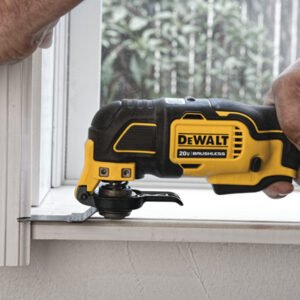
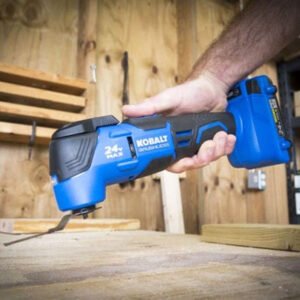
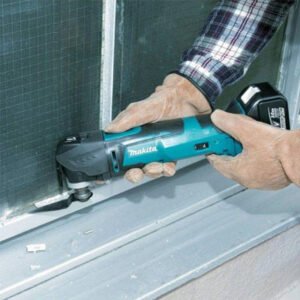
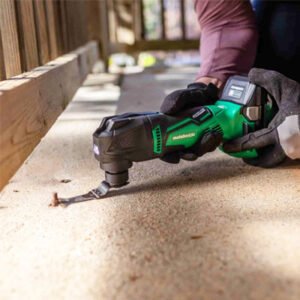
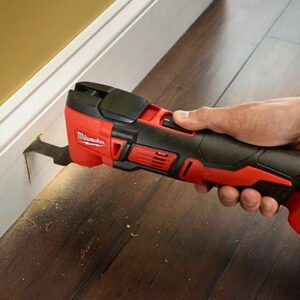
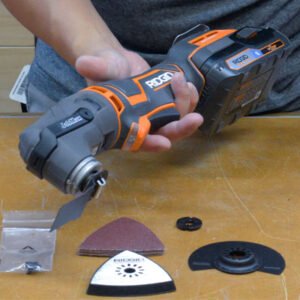
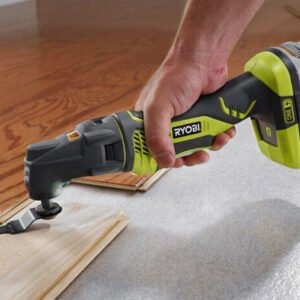
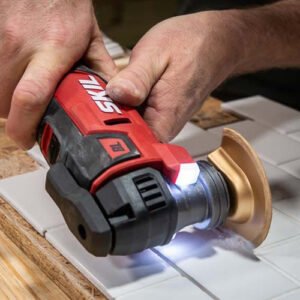


A cordless oscillating multi-tool can be one of the most versatile tools in a workshop, renovation kit, or general home-maintenance setup. A single tool can handle tasks such as plunge cutting, flush cutting, sanding, scraping, grout removal, trimming, and detail work, provided the tool and accessory are appropriate for the job.
For Canadian buyers, the best choice is not necessarily the tool with the highest advertised speed or the largest battery. Compatibility with the battery platform you already own, accessory availability, ergonomics, cutting control, vibration management, and the type of work you expect to perform can have a much greater effect on long-term usefulness.
A cordless multi-tool uses a rapidly oscillating attachment rather than a conventional spinning blade. The small angular movement allows accessories to work in confined spaces where a circular saw, reciprocating saw, or rotary tool may be impractical.
Most current models accept a selection of blades and other accessories designed for specific materials and applications. Depending on the model and accessory, common jobs include cutting wood, plastic and certain metals, removing adhesive or sealant, scraping coatings, sanding corners, and removing grout.
The oscillating movement provides controlled cutting action while keeping the accessory relatively compact. This makes the tool particularly useful for repair and renovation work where access is limited or where a conventional blade cannot approach the workpiece safely and accurately.
It is important to distinguish an oscillating multi-tool from a rotary multi-tool. A rotary tool spins an accessory at high speed and is better suited to applications such as grinding, engraving, polishing, and small precision cuts. An oscillating multi-tool is generally better for flush cuts, plunge cuts, scraping, sanding, and renovation-oriented tasks.
Variable speed is one of the most useful features on a multi-tool. Different materials and accessories respond differently to speed changes. A higher setting can be useful for some cutting applications, while a slower setting can provide better control for delicate materials, scraping, or sanding.
Do not assume that the tool with the highest maximum oscillation rate is automatically the best. Practical speed control and the ability to maintain consistent performance under load can be more important than the maximum figure alone.
The oscillation angle describes how far the accessory moves during each side-to-side cycle. A larger angle can contribute to faster material removal, while a smaller movement may provide a more controlled feel for precision work. Specifications should therefore be considered alongside the intended application rather than viewed as isolated performance numbers.
A variable-speed trigger, dial, or electronic speed control gives the user greater flexibility than a single-speed design. When comparing models, check how easy the control is to adjust while working and whether the selected speed remains predictable under changing loads.
Many higher-end cordless multi-tools use brushless motors. Brushless designs can offer efficient power delivery and reduced mechanical wear compared with traditional brushed motors. They can be particularly attractive to frequent users who expect to operate the tool regularly.
However, brushless technology alone does not guarantee that one model will outperform another in every application. Motor design, electronic controls, gearing, battery technology, tool weight, and accessory choice all contribute to the overall experience.
Battery voltage should be considered as part of the manufacturer's complete cordless ecosystem. Buyers who already own compatible batteries may find that purchasing a bare tool is more economical than starting a new battery platform.
Common professional and consumer cordless platforms from brands such as DeWalt, Milwaukee, Makita, Bosch, Ryobi, and Metabo HPT offer different combinations of batteries, chargers, tools, and accessories. Always verify exact battery compatibility because batteries from different platforms are generally not interchangeable simply because their nominal voltage appears similar.
Battery capacity is commonly expressed in ampere-hours. A higher-capacity battery can provide greater runtime, but it usually adds weight and bulk. For overhead work, trimming, or detailed renovation tasks, a smaller battery may make the tool noticeably easier to control.
For longer cutting or sanding sessions, a larger battery may be preferable. The right choice therefore depends on whether portability or runtime is the higher priority.
Fast accessory changes can save substantial time when a project involves several operations. Look for a secure mechanism that allows blades and sanding accessories to be changed without unnecessary adjustments.
When evaluating a tool, also consider the accessory interface and the range of compatible accessories available in Canada. A sophisticated tool becomes less useful if suitable blades or sanding accessories are difficult to source.
An integrated LED can be useful when working inside cabinets, beneath fixtures, around plumbing, or in other poorly illuminated areas. It is a convenience feature rather than a substitute for proper task lighting, but it can make blade positioning easier.
Oscillating tools naturally transmit movement into the user's hands. Grip shape, tool balance, vibration control, trigger placement, and overall weight can therefore have a significant effect on comfort.
This becomes especially important when sanding or performing extended cutting operations. A tool that feels manageable for a short repair may become tiring during a longer renovation project.
If you already have cordless power tools, battery-platform compatibility should be near the top of your comparison list. Staying within an existing ecosystem can reduce the need to purchase additional batteries and chargers.
DeWalt's cordless ecosystem includes tools designed for homeowners, tradespeople, and professional users. Its broad range can make platform compatibility an important consideration for existing DeWalt owners.
Milwaukee offers multiple cordless tool families aimed at different performance and size requirements. Buyers should identify the exact battery family rather than assuming that all Milwaukee cordless batteries fit every Milwaukee tool.
Makita has a large cordless ecosystem covering woodworking, construction, maintenance, landscaping, and other applications. Buyers already invested in a compatible Makita platform can potentially benefit from battery and charger sharing.
Bosch cordless tools include compact and professional-oriented options. When comparing Bosch models, check the specific battery system and tool generation because compatibility can vary between product families.
Ryobi's cordless ecosystem is particularly relevant to homeowners and DIY users who want to build a broad collection around a shared battery family. The ecosystem approach can be valuable when a multi-tool is only one of several cordless tools needed around the home.
A bare tool normally includes the tool itself and a limited accessory selection, while a kit may include one or more batteries, a charger, a carrying case, and additional accessories. Neither configuration is universally better.
The multi-tool itself is only part of the system. Blade and accessory selection can dramatically affect cutting speed, finish quality, durability, and suitability for different materials.
Wood blades are available in different tooth configurations and sizes. A coarse blade can be useful when speed matters, while finer teeth can provide more controlled cuts depending on the material and application.
Bi-metal accessories are designed for applications involving tougher materials and may be useful when cutting through materials that would quickly wear a basic wood-oriented blade. Always check the manufacturer's stated material compatibility before cutting metal or mixed-material assemblies.
Carbide-grit or carbide-edged accessories can be appropriate for demanding applications such as grout removal and certain abrasive materials. Their intended use varies by design, so the accessory manufacturer's specifications should guide selection.
Triangular sanding pads allow access into corners and tight areas. Different abrasive grits should be selected according to the stage of the project. Coarse abrasives remove material more aggressively, while finer grits are generally used for smoothing and finishing.
Scraper attachments can help remove adhesive, caulk, paint residues, flooring material, and other coatings when the accessory is appropriate for the task. The substrate underneath should always be considered because aggressive scraping can damage softer surfaces.
DIY users often benefit from a balanced multi-tool rather than an extremely specialized professional model. Priorities should include comfortable handling, variable speed, straightforward accessory changes, useful battery runtime, and a good selection of compatible accessories.
For occasional projects, platform compatibility may be more important than maximum specifications. If the household already owns cordless tools from Ryobi, DeWalt, Makita, Milwaukee, or Bosch, staying within that ecosystem can simplify battery management.
Professionals who use an oscillating tool frequently should place greater emphasis on durability, sustained performance, ergonomics, accessory availability, and battery-system flexibility.
Frequent users should also consider how easily consumable accessories can be replaced. A multi-tool used daily can consume blades and sanding materials considerably faster than one used for occasional household repairs.
A compact design can be valuable for cabinet installation, electrical work, plumbing repairs, trim work, and other situations where access is restricted. Compactness should not be evaluated by tool dimensions alone; battery size and grip shape can significantly affect how easily the tool fits into confined spaces.
For users primarily interested in cutting, examine motor performance, electronic speed control, blade compatibility, oscillation characteristics, and battery capacity. A powerful motor cannot compensate for a poor-quality or inappropriate blade.
For plunge cuts, blade width and tooth design also matter. A narrower blade can make certain detailed cuts easier, while a wider accessory can provide a different balance of stability and cutting area.
If sanding represents a significant portion of your intended use, ergonomics become especially important. Look for a comfortable grip, controllable speed, and a sanding-pad attachment system that holds the abrasive securely.
Dust management should also be considered. Fine sanding dust can accumulate quickly, particularly when working indoors. A compatible dust-extraction setup, appropriate vacuum, and suitable respiratory and eye protection can help reduce exposure.
Grout removal is a demanding application that can place substantial wear on accessories. Carbide-oriented accessories may be appropriate for some grout-removal tasks, but users should work carefully to avoid damaging adjacent tile, backing material, or waterproofing components.
Control is particularly important in bathrooms and other tiled areas. The tool should be treated as a precision renovation instrument rather than simply operated at maximum speed.
Cordless models offer freedom from an extension cord and are convenient for outdoor work, unfinished construction areas, vehicles, and locations where electrical outlets are inconvenient. They also eliminate the possibility of dragging a power cable across the immediate work area.
Corded models can still make sense for extended stationary work where continuous electrical power is convenient. The decision should be based on the working environment, expected runtime, and whether battery ownership is already part of your tool collection.
Power requirements depend heavily on the workpiece and accessory. Cutting thin trim is very different from removing grout, cutting dense materials, or performing repeated plunge cuts.
Rather than selecting a model solely from its advertised motor rating, consider the complete combination of motor, electronics, battery, accessory, and intended workload. For occasional DIY jobs, a moderate model may be entirely sufficient. For frequent professional use, sustained performance and thermal management become more significant.
Multi-tools are often used in awkward positions. You may need to hold one above shoulder height, reach into a cabinet, work close to a wall, or maintain a precise blade position. A small difference in weight can therefore become noticeable over a long session.
Battery placement also affects balance. A larger battery may increase runtime but change the center of gravity. If possible, compare the complete tool-and-battery combination rather than evaluating the tool body alone.
The cheapest multi-tool may look attractive initially, but the total cost can change after adding batteries, chargers, replacement blades, sanding accessories, and other consumables. Compare the complete ownership proposition.
Buying into a second battery ecosystem unnecessarily can increase long-term expense and complicate charging and storage. Existing battery ownership should be part of the initial comparison.
Maximum battery capacity is not always desirable. A heavy battery can make detailed overhead work less comfortable. Consider whether additional runtime is worth the extra weight for your normal applications.
A high-performance tool equipped with an unsuitable accessory can deliver poor results. Select the blade according to the material, thickness, cut type, and desired finish.
Maximum oscillation speed is only one specification. Variable-speed control, electronic regulation, and practical low-speed usability can be equally important.
A multi-tool is a platform. Before purchasing, determine which blade styles, sanding pads, scrapers, and specialty accessories are available for the tool and whether replacements are easy to find in the Canadian market.
When two models appear similar, use a consistent comparison process rather than relying on marketing descriptions.
Oscillations per minute describe the frequency of the tool's movement. The number is useful for comparing specifications, but it does not independently determine cutting performance.
The oscillation angle indicates the angular movement of the accessory. It can help indicate the tool's operating characteristics but should be assessed alongside motor performance, control electronics, and accessory design.
Amp-hours provide an indication of battery capacity rather than a simple guarantee of runtime. Actual runtime varies according to load, material, accessory, speed, battery condition, temperature, and user technique.
Brushless motors generally reduce the mechanical wear associated with motor brushes and can support efficient electronic control. Brushed models can still be appropriate for occasional users when price and existing platform compatibility are the primary considerations.
Always read the tool and accessory instructions before use and use accessories specifically rated for the material and application. Wear appropriate eye protection, and use hearing and respiratory protection when the task and environment warrant it.
Regular maintenance can help preserve reliable operation. Keep ventilation openings clear, remove accumulated dust, inspect the accessory interface, and examine the battery and charger for visible damage.
Blades and sanding accessories are consumables. Replacing a worn accessory can improve cutting efficiency and reduce the tendency to apply excessive force. Follow the manufacturer's maintenance instructions rather than applying lubricants or cleaners that are not specified for the tool.
Store batteries according to the manufacturer's recommendations and avoid exposing them to extreme temperatures, moisture, or physical damage. If a battery shows swelling, cracking, leakage, unusual heat, or other signs of damage, stop using it and follow the manufacturer's safety guidance.
Canadian buyers should pay attention to the exact model number, included battery configuration, charger specification, accessory package, and retailer-specific package contents. Product names can be similar while kit contents differ.
Seasonal promotions can also change the relative value of bare tools and kits. When comparing today's options, compare the complete package rather than assuming the lowest advertised tool price represents the lowest overall cost.
Cold temperatures can affect battery performance and charging behavior. If a cordless multi-tool is stored or transported in very cold conditions, follow the battery manufacturer's instructions regarding temperature and charging. Do not assume that a battery operating in freezing conditions will provide the same performance as one operating at a more moderate temperature.
A practical accessory collection should reflect the jobs you actually perform. A homeowner might prioritize wood-cutting blades, a scraper, and sanding pads. A renovator may need additional cutting blades, grout-removal accessories, and multiple sanding grits.
Versatility does not mean an oscillating multi-tool is the optimal choice for every job. A circular saw is generally better suited to long straight cuts in sheet goods and lumber. A reciprocating saw is often better for aggressive demolition. A rotary tool is more appropriate for small grinding, engraving, and polishing tasks.
The multi-tool is strongest when the job requires controlled, localized material removal, particularly where access is restricted or a flush or plunge cut is needed.
Good technique can matter as much as tool selection. Start with the correct accessory, select an appropriate speed, stabilize the tool, and let the accessory do the cutting rather than applying excessive pressure.
For plunge cuts, establish the cutting position carefully and avoid forcing the accessory deeper than necessary. For sanding, use an appropriate abrasive and allow the tool to remove material gradually. For scraping, maintain a controlled angle and avoid digging the edge unnecessarily into the substrate.
There is no single best model for every Canadian buyer. The right choice depends on the intended application, battery platform, budget, ergonomics, accessory compatibility, and expected frequency of use. Buyers should compare current specifications and verified customer feedback before purchasing.
They can be particularly worthwhile for renovation, maintenance, woodworking, installation, and repair tasks that require precise cuts or access to confined spaces. Their versatility can reduce the number of specialized tools needed for smaller jobs.
A brushless model can be advantageous for frequent users because brushless motors can provide efficient operation and avoid the brush wear associated with traditional brushed motors. Whether the additional cost is worthwhile depends on workload and the rest of the tool's specifications.
Choose battery capacity according to the job. Smaller batteries reduce overall weight and can be preferable for detail work, while larger batteries can be useful when longer runtime is more important.
Not necessarily. Manufacturers may have multiple battery platforms or generations. Always verify the exact battery family and compatibility information for the specific tool.
Some can, when fitted with an accessory specifically designed and rated for the material. Metal-cutting applications require the correct blade, appropriate speed and technique, and suitable protective equipment.
Yes, compatible grout-removal accessories are available for suitable oscillating multi-tools. Work carefully because an aggressive accessory can damage adjacent tile or the underlying surface.
No. An oscillating multi-tool is excellent for localized and detailed cuts but is not designed to replace a circular saw for long, straight cuts through larger workpieces.
There is no universal replacement interval. Replace an accessory when it becomes excessively worn, cuts poorly, overheats, or otherwise no longer performs as intended. Material hardness, cutting frequency, pressure, speed, and blade quality all influence service life.
If you already own compatible batteries and a charger, a bare tool can avoid unnecessary duplication. If you are entering a new battery ecosystem, a kit may provide better overall utility because it can include the battery and charger needed to operate the tool.
The strongest cordless multi-tool purchase is the one that fits the user's complete workflow rather than the one with the most impressive specification on paper. Start with your battery ecosystem, identify the materials and tasks you expect to encounter, then compare speed control, oscillation specifications, motor technology, weight, ergonomics, accessory compatibility, and kit contents.
For Canadian buyers in 2026, it is also sensible to verify the exact model number and package contents before ordering, particularly when comparing bare tools with kits. Check current specifications, read verified customer reviews, compare compatible accessories, and consider the long-term cost of batteries and consumables as well as the initial purchase price.