

Explore cordless power tools, kits, batteries, chargers, accessories and related equipment available to Canadian shoppers. Compare product options and follow useful buying guides before you buy.
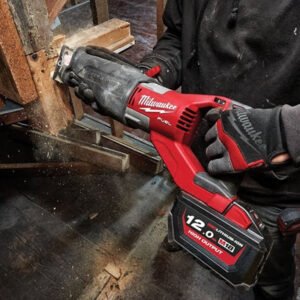
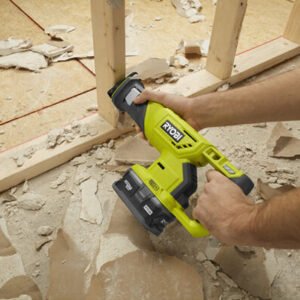


A cordless reciprocating saw can be one of the most versatile cutting tools in a workshop, renovation project, construction site or outdoor work area. The best model is not necessarily the one with the highest advertised speed or the largest battery. Cutting performance depends on how the saw combines motor output, stroke length, stroke rate, trigger control, blade design, vibration management, battery capacity and overall ergonomics.
Canadian buyers should also consider factors that become more important in colder weather and during extended outdoor use. Battery performance can be affected by low temperatures, while heavier demolition work can consume considerably more energy than occasional trimming. Compatibility with an existing battery platform may therefore be as important as the saw's headline specifications.
Stroke length describes how far the blade travels during each reciprocating cycle. A longer stroke can remove more material per cycle and is particularly useful for demolition and aggressive cutting. Shorter-stroke tools can offer greater control for lighter applications and may feel easier to manage when working in confined spaces.
Do not evaluate stroke length in isolation. A long stroke paired with a capable motor and appropriate blade can be highly effective, but the actual cutting experience also depends on stroke rate, blade quality, material thickness and the user's ability to maintain stable contact with the workpiece.
Stroke rate indicates how quickly the blade moves back and forth. Higher maximum strokes per minute can be advantageous when cutting suitable materials, while variable-speed control is more useful than simply having a high maximum number.
A variable-speed trigger lets the operator start slowly, establish the cut and then increase speed when appropriate. This can help reduce blade wandering and improve control, particularly when beginning a cut in metal or other materials where excessive initial speed can make accurate positioning more difficult.
Motor performance influences how well a reciprocating saw maintains cutting action under load. For demanding demolition work, buyers should look beyond no-load speed and consider the complete combination of motor design, battery voltage, electronic controls and tool architecture.
Brushless motors are common in higher-end cordless power tools because they can provide efficient operation and reduce the maintenance associated with replaceable brushes. However, brushless construction alone does not guarantee that one saw will outperform every competing model. The complete tool system matters.
Battery voltage is useful for understanding the platform and general class of a cordless tool, but it should not be treated as a direct measurement of cutting power. Battery capacity, usually expressed in amp-hours, provides more information about stored electrical energy and potential runtime, although actual runtime varies substantially with workload.
A compact battery may make a reciprocating saw easier to handle overhead, while a higher-capacity pack can be preferable for prolonged cutting. Buyers who already own cordless tools should also investigate battery compatibility before purchasing a bare tool.
Battery-platform compatibility can significantly affect the overall value of a cordless reciprocating saw. Brands such as Milwaukee, DeWalt, Makita, Bosch and Ryobi offer broad cordless ecosystems in which batteries may be shared among compatible tools within the same platform.
If you already own several tools from one ecosystem, staying within that platform can reduce the need to purchase additional chargers and battery packs. It can also simplify storage and charging routines.
However, compatibility must be verified by model and platform rather than assumed from the brand name alone. Different generations, voltage classes and battery families are not necessarily interchangeable.
For wood cutting, a blade with suitable tooth geometry can make a major difference. Coarse-tooth blades are generally associated with faster cutting in appropriate wood applications, while finer-tooth designs can provide a different balance between finish and speed.
For demolition work involving nails or embedded fasteners, a blade specifically designed for nail-embedded wood can be more appropriate than a general-purpose wood blade.
Metal cutting requires blades designed for the material and thickness involved. Fine-tooth blades are commonly used for metal applications because their tooth pattern is better suited to controlled cutting of metal stock.
Cutting metal also places different demands on the saw and blade than cutting wood. Avoid selecting a saw solely on its performance in lumber if your primary use involves pipe, sheet metal, conduit or other metal components.
Plastic, composite and other synthetic materials can require a different blade selection again. The appropriate blade depends on the material's thickness, hardness and tendency to melt or chip during cutting.
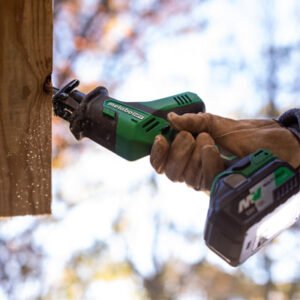
Some reciprocating saws can be used for pruning when paired with an appropriate pruning blade. This can be useful for branches and outdoor maintenance, but it is important to use a blade specifically suited to the task and to maintain stable control of the saw.
Some reciprocating saws provide an orbital or pendulum action that changes the blade's movement. Instead of travelling primarily in a straight reciprocating path, the blade can follow a more aggressive movement intended to improve cutting speed in suitable materials.
Orbital action can be useful for fast wood cutting and demolition. It is not automatically desirable for every application. Precision cutting and many metal-cutting tasks can benefit from a more controlled straight-stroke setting.
If a saw offers selectable orbital action, the feature can provide greater versatility than a tool with a single cutting mode.
Reciprocating saws naturally generate significant movement because the blade repeatedly changes direction. Vibration control can therefore have a substantial impact on comfort, particularly during long cutting sessions.
When comparing models, look for design features such as balanced construction, anti-vibration systems, rubberized grip areas and comfortable trigger placement. A tool that feels manageable during a short test can become tiring when used repeatedly throughout a renovation or demolition project.
Weight distribution matters as much as the published tool weight. A compact saw with balanced mass can feel easier to control than a heavier model whose weight is concentrated far from the user's hands.
Variable-speed operation is one of the most useful controls on a reciprocating saw. It allows the user to adjust blade speed according to the material, blade and stage of the cut.
Slow initial movement can help establish a cut accurately. Higher speed can then be used when the blade is properly engaged and the material allows it. This makes variable-speed control particularly valuable for users who work with multiple materials rather than performing only repetitive demolition cuts.
A tool-free blade clamp makes switching between cutting tasks faster and more convenient. This becomes particularly useful when moving between wood, metal and demolition blades during the same project.
When assessing a blade-change system, consider how easily it can be operated while wearing work gloves and whether the mechanism provides a secure hold on the blade. The convenience of a tool-free system is only valuable when the mechanism is straightforward and reliable.
The shoe helps support the saw against the workpiece and can improve control during a cut. An adjustable shoe can provide additional flexibility because the exposed portion of the blade can be changed according to the application.
A stable shoe can also help the operator maintain consistent contact with the material. For demolition work, this can be especially important because the cutting environment may be uneven or difficult to position.
Compact reciprocating saws are useful where access and maneuverability are more important than maximum cutting capacity. Their shorter form factor can make them convenient for overhead work, tight spaces, plumbing applications and lighter renovation tasks.
The trade-off is that a compact tool may not provide the same combination of power, stroke characteristics and sustained performance expected from a full-size demolition-oriented model.
Full-size reciprocating saws are generally better suited to demanding construction and demolition work. They can provide a larger platform for high-output motors, larger batteries and additional control features.
The additional size and weight can become noticeable during overhead or extended work, so a full-size tool is not automatically the best choice for every Canadian homeowner.
Professional users who depend on a reciprocating saw frequently should prioritize durability, battery availability, ergonomics, vibration control, serviceability and platform compatibility. A contractor may place considerably more value on sustained performance and standardized batteries than someone who uses the tool a few times each year.
Homeowners can often prioritize versatility, manageable weight, straightforward controls and overall platform value. If the tool will be used primarily for occasional demolition, pruning or renovation work, buying into an expensive professional ecosystem may not always be necessary.
Milwaukee is widely associated with professional-oriented cordless power tools and the M18 ecosystem. Its reciprocating saw range includes tools aimed at demanding cutting and demolition applications. Buyers should compare the exact M18 model, battery configuration and intended use rather than assuming every Milwaukee reciprocating saw has identical performance.
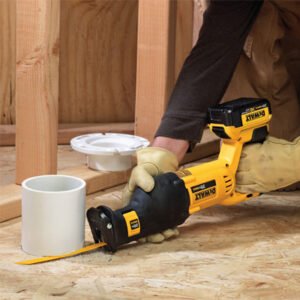
DeWalt's cordless platform is another major option for Canadian buyers. Its reciprocating saws span different sizes and performance categories, making it important to compare compact and full-size models according to workload.
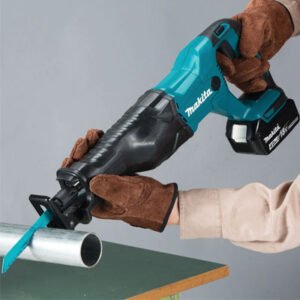
Makita offers cordless tools across several battery platforms, with reciprocating saws designed for different levels of portability and cutting performance. Existing Makita users should pay close attention to the exact battery system supported by the selected saw.
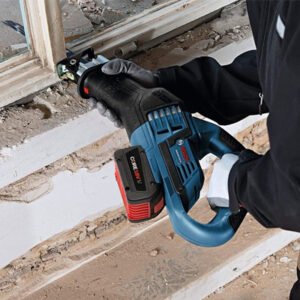
Bosch is another established power-tool manufacturer with cordless reciprocating saw options. Bosch models may appeal to users who prioritize compact tool design, ergonomics and compatibility within an existing Bosch cordless system.
Ryobi's ONE+ ecosystem can be particularly relevant to homeowners and DIY users who already have compatible batteries. The ability to share batteries across a broad range of household and workshop tools can be an important part of the buying decision.
Battery voltage is only one part of the specification. Motor design, electronics, battery capacity, blade selection and mechanical design all contribute to real-world cutting performance.
A bare tool may look attractive compared with a kit, but the total cost can be different if you do not already own a compatible battery and charger. Compare the complete setup required for use rather than comparing bare-tool prices alone.
Even a powerful reciprocating saw can perform poorly when paired with an unsuitable or worn blade. Blade selection should be based on material type, thickness and desired cutting behaviour.
A high-output demolition saw can be excessive for occasional pruning or small renovation jobs. Extra weight and battery requirements may reduce convenience if the tool's capabilities greatly exceed the user's typical workload.
Specifications cannot describe every aspect of handling. Grip shape, trigger position, balance, vibration and overall weight can determine how comfortable the saw feels during repeated cuts.
When two models appear similar, compare them in a consistent order. Start with battery-platform compatibility, then examine size and weight, motor type, stroke length, maximum stroke rate, variable-speed control, orbital action, shoe design, blade-change mechanism and vibration-management features.
Next, consider the batteries required for your workload. A saw that is excellent with a compact battery may behave differently from the same tool fitted with a larger high-capacity pack. The battery's additional weight may also affect handling.
Finally, compare the included equipment. Determine whether the package includes batteries, a charger, blades or other accessories, and make sure comparisons are made on equivalent configurations.
Published battery capacity should not be interpreted as a guaranteed number of cuts. Runtime varies according to material thickness, blade condition, cutting technique, motor load, battery age and temperature.
Cold Canadian conditions can also influence lithium-ion battery behaviour. Batteries generally perform differently at low temperatures than they do under moderate indoor conditions. Follow the battery manufacturer's guidance for storage, charging and temperature limits.
For extensive demolition work, owning more than one compatible battery can be more useful than relying on a single high-capacity pack. This allows one battery to be charging while another is being used, provided the manufacturer-approved charging and operating conditions are followed.
A reciprocating saw should be treated as a high-powered cutting tool capable of causing serious injury. Wear appropriate eye protection and other task-appropriate personal protective equipment, secure the workpiece where practical, maintain a firm grip and keep hands away from the blade path.
Before cutting into walls, ceilings or enclosed structures, identify potential electrical wiring, plumbing, gas lines and other hidden services. During demolition, also consider nails, screws, structural components and unstable sections of material.
Use the blade recommended for the material and allow the tool to perform the cutting rather than forcing it aggressively. Inspect blades before use and replace damaged or excessively worn blades.
Routine care can help preserve the performance of a cordless reciprocating saw. Keep ventilation openings clear of accumulated dust and debris, inspect the blade clamp periodically and check the shoe and other moving components for obvious damage.
Keep batteries clean and dry and store them according to the manufacturer's instructions. Avoid exposing battery packs to inappropriate temperatures, moisture or physical damage.
After demanding demolition work, allow the tool and battery to return to an appropriate temperature before charging when required by the manufacturer's instructions. Use only compatible chargers and batteries specified for the particular tool platform.
For general renovation, versatility is usually more valuable than maximum demolition performance. Look for variable speed, comfortable handling, a practical size and a battery platform that can support other household tools.
Heavy demolition calls for a robust saw, appropriate stroke characteristics, strong battery support, good vibration control and blades designed for demolition materials. A selectable orbital mode can be useful for suitable wood-cutting applications.
Plumbing and electrical applications often involve restricted access. A compact reciprocating saw can be easier to position around pipes, framing and other obstacles. Control and maneuverability may matter more than maximum cutting speed.
For pruning, prioritize manageable weight, good trigger control and compatibility with suitable pruning blades. The saw should be easy to position accurately without becoming tiring during repeated cuts.
Professional users should focus on the complete cordless ecosystem. Battery availability, ergonomics, durability, cutting performance, vibration control and the availability of compatible accessories can be more important than any single specification.
Canadian shoppers should compare the exact product configuration offered by the retailer. The same model family can be sold as a bare tool, a kit with one battery, a kit with multiple batteries or a package with different accessories.
Before purchasing, verify that the product is intended for the Canadian market and check the current retailer information for price, stock status, included components, warranty terms and return conditions. These details can change and should not be inferred from an older review.
Also consider the availability of replacement blades and compatible batteries. A cordless saw is part of a larger system, and the long-term convenience of that system can be more important than a small difference between competing tools.
Use a sharp blade matched to the material, support the workpiece and position the shoe securely before increasing cutting speed. Let the blade establish the cut rather than immediately applying maximum trigger pressure.
For long cuts, periodically reassess blade condition and tool temperature. A dull blade can make the motor work harder and increase cutting time. If cutting becomes unusually slow, inspect the blade and confirm that it is appropriate for the material before assuming that the saw lacks power.
For demolition, plan the cutting sequence instead of simply cutting through whatever is immediately accessible. Removing sections progressively can improve control and reduce the chance of the blade becoming trapped.
There is no single best model for every Canadian buyer. The right choice depends on the intended materials, workload, desired size, battery platform, budget and required features. Compare the exact specifications and package contents of the models under consideration.
A brushless model can be attractive for buyers who want a modern cordless tool platform and efficient motor design, particularly for frequent use. However, the overall tool specification and intended workload should determine the purchase rather than the brushless label alone.
Many modern cordless reciprocating saws are designed specifically for demolition and heavy cutting. The important factors are the particular model, battery configuration, blade selection, material and workload.
The appropriate battery depends on whether you prioritize lower weight or longer runtime. Smaller packs can improve maneuverability, while higher-capacity batteries can be useful for extended cutting. Always use batteries approved for the selected tool.
Yes, when equipped with a blade designed for the specific metal application. Blade tooth design and material suitability are critical, and the cutting approach should be adjusted to the thickness and type of metal.
Some cordless reciprocating saws can be used for pruning when paired with a suitable pruning blade. Check the tool and blade manufacturer's guidance and use appropriate safety precautions.
Cordless models provide greater mobility and eliminate the need to manage an extension cord. Corded models can remain attractive for users who have access to reliable mains power and want continuous operation without battery changes. The better option depends on the work environment.
A bare tool can make sense when you already own compatible batteries and a charger. A kit may be more practical when starting a new battery platform. Compare the total cost of the complete setup rather than the advertised tool price alone.
There is no universal replacement interval. Blade life depends on the material being cut, cutting frequency, blade quality and technique. Replace a blade when it becomes excessively worn, damaged or ineffective for the intended task.
The best cordless reciprocating saw is the model that fits the user's actual workload rather than the model with the most impressive specification on paper. For occasional DIY work, manageable size, platform value and ease of use may be the priorities. For renovation and construction, a combination of cutting performance, battery capacity, vibration control and durability becomes more important. For heavy demolition, a robust professional-oriented platform and appropriate high-performance blades may justify the additional size and cost.
Before making a 2026 purchase, compare the exact model number, battery system, included accessories and current Canadian retailer information. Specifications, package contents, prices and availability can change, so verify those details immediately before buying.