

♥ Wishlist





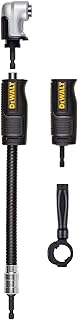
DEWALT cordless angle drills are designed for situations where access matters as much as drilling performance. Their right-angle configuration can make it easier to work between studs, inside cabinets, around framing, beneath counters and in other restricted areas where the body of a conventional drill may get in the way. For Canadian homeowners, renovators and professional tradespeople, choosing the right model means balancing accessibility, power, battery compatibility, ergonomics and accessory requirements.
A cordless angle drill can be particularly useful for electrical installation, plumbing-related drilling, cabinetry, woodworking, framing and renovation projects. Instead of selecting a model based only on its maximum power rating, consider the actual spaces in which you will use it. A compact head and manageable overall length can provide more practical value than extra output when clearance is the main challenge.
Battery compatibility is one of the first specifications to check. If you already own compatible DEWALT cordless tools, a bare-tool angle drill may help you avoid buying another battery and charger. However, DEWALT offers different cordless platforms, so compatibility should always be confirmed for the exact model rather than assumed from the brand name alone. For Canadian shoppers, also check the precise kit configuration and included charging equipment before purchasing.
The chuck or accessory interface determines which drill bits and driving accessories can be used. Consider the bits, hole saws and driver accessories already in your workshop, then verify that their shank sizes match the selected drill. A suitable accessory can have a major effect on drilling performance, control and efficiency, so the drill should be considered as part of a complete drilling system.
Speed range and torque should be evaluated together. Different materials, bit sizes and drilling applications require different operating speeds. Higher torque can be useful for demanding work, but maximum torque alone does not determine whether a drill is the right choice. In confined spaces, controllability and the ability to regulate speed can be especially important.
Physical dimensions are critical for a right-angle drill because improved access is usually the reason for choosing this tool format. Compare the head profile, overall length, handle position and clearance around the chuck. Weight also matters during overhead installation or repetitive drilling. Remember that the battery contributes to the final working weight, so evaluate the complete tool-and-battery combination when possible.
For cabinetry and furniture installation, a compact angle drill can make it easier to reach areas where a standard drill is awkward. For framing and larger timber applications, power, battery capacity and compatibility with larger accessories may become more important. Use drill bits suited to the material and follow the operating recommendations for the tool and accessory.
Plumbers and electricians frequently work around framing, cabinets and existing installations where clearance is limited. A right-angle drill can help position the drilling point without requiring the same amount of space behind the tool. Always inspect the work area before drilling and account for concealed electrical wiring, plumbing and other services.
Renovation projects can involve unpredictable access challenges. Walls, flooring, cabinets and structural framing may leave only a narrow working area. A DEWALT cordless angle drill can provide useful flexibility when a conventional drill is too long or difficult to position. For frequent heavy-duty construction work, compare durability, workload capability, battery capacity and accessory compatibility as carefully as compactness.
Motor technology is another consideration when comparing models. Brushless motors eliminate conventional carbon brushes and can offer advantages in efficiency, electronic control and long-term use. They may be particularly appealing to professionals who use cordless tools frequently. A brushed model can still make sense for occasional users who prioritise a particular specification or overall purchase cost. The best choice depends on the complete combination of workload, size, battery system and features.
A bare DEWALT cordless angle drill can be a practical option when you already have the required compatible batteries and charger. A kit may be more convenient if you are new to the relevant cordless platform or need everything ready for immediate use. Compare the total package rather than the tool-only price, including battery capacity, charger requirements and included accessories.
Start by identifying the tightest spaces where the drill will be used, then consider the materials, typical hole sizes and accessories required. From there, compare speed, torque, chuck design, dimensions, weight, ergonomics and battery compatibility. Occasional DIY users may prioritise manageable weight and value, while professional tradespeople may place greater emphasis on durability, consistent performance and battery-platform flexibility.
For Canadian shoppers, product configurations, pricing and availability can change. Before buying, verify the exact model number, package contents, battery configuration and current retailer listing. By comparing the complete specification instead of focusing on one headline feature, you can choose a DEWALT cordless angle drill that provides the access, control and performance your projects actually require.
Find DEWALT cordless angle drills designed for drilling and fastening where conventional drills can be difficult to position. Compare compact right-angle designs, battery options, chuck sizes, speed ranges and other key specifications for Canadian jobsites, workshops, renovations and trade applications.