

Explore cordless power tools, kits, batteries, chargers, accessories and related equipment available to Canadian shoppers. Compare product options and follow useful buying guides before you buy.
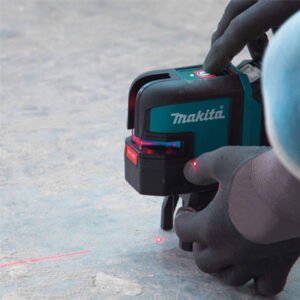
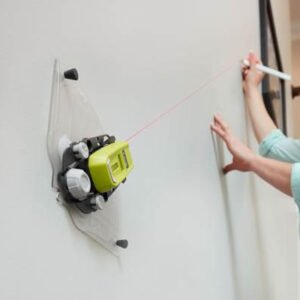


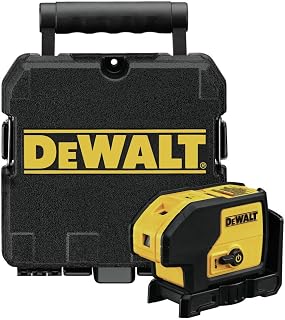


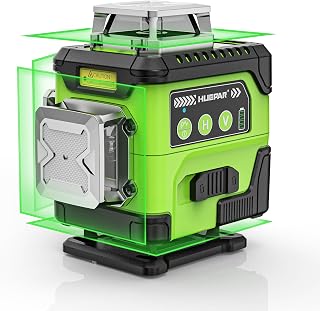


A line laser level can make layout work faster and easier by projecting a visible reference line across a wall, floor, ceiling, or other surface. For Canadian homeowners, DIY users, renovators, electricians, cabinet installers, drywall professionals, flooring installers, and general contractors, the right model depends on much more than the number of laser lines.
When comparing the best line laser levels in Canada, consider the working range, line visibility, self-leveling capability, accuracy, mounting options, power source, operating environment, durability, and compatibility with a laser detector. A compact model may be ideal for indoor renovation work, while a more rugged unit with a receiver-compatible laser can be better suited to larger construction projects.
A line laser level projects one or more straight laser reference lines onto a surface. These lines can help users align cabinets, shelves, tiles, electrical fixtures, framing components, doors, windows, ceilings, flooring, and other installations.
Unlike a traditional spirit level, a laser level allows the reference line to extend considerably farther across a working area. This can reduce the need to repeatedly reposition a short level and can make alignment easier when working alone.
Line laser levels are available in several configurations. Some project a single horizontal line, while others provide horizontal and vertical lines together. More advanced models may provide multiple planes or a 360-degree horizontal reference, which can be useful when several walls need to be aligned from the same setup.
The type of projected line should match the work you normally perform.
A cross-line model is often a practical choice for general DIY renovation because it covers many common layout tasks without requiring the complexity of a larger multi-plane system.
Self-leveling is one of the most important features to examine. A self-leveling laser uses an internal mechanism to establish a level reference within its specified operating range.
Check the manufacturer's stated self-leveling range rather than assuming every laser automatically corrects for any position. If the tool is placed outside that range, it may not be able to establish the correct reference.
Accuracy matters when a small error can become significant over a longer working distance. Manufacturers typically express laser accuracy using a measurement over a specified distance.
Do not compare accuracy figures without checking how each manufacturer defines the measurement. A specification expressed at one distance cannot always be compared directly with a specification expressed at another distance.
Working range describes how far the projected line can be used effectively under the conditions specified by the manufacturer. Bright ambient light can make a laser line harder to see, particularly when working near windows or outdoors.
A laser that performs well in a small room may not provide the same practical visibility in a large, brightly illuminated construction area. Consider the environments in which you will actually use the tool rather than choosing the largest published range automatically.
Green and red laser diodes are common in modern line lasers. Green lines are often easier for the human eye to see under many indoor conditions, while red lasers remain widely used and can be perfectly suitable for many applications.
Visibility depends on more than colour. Ambient lighting, working distance, surface colour, line thickness, viewing angle, and the quality of the laser system all influence practical visibility.
A thin laser line can help with detailed positioning because the reference is more precise visually. However, a very fine line may become harder to see at longer distances or under brighter lighting.
For general installation work, look for a balance between visibility and precision instead of choosing solely on the basis of the thinnest advertised line.
A 360-degree horizontal laser projects a reference around the room instead of stopping at a single forward-facing section. This can be particularly convenient when installing cabinets, suspended ceilings, wall panels, tile layouts, or multiple fixtures at the same height.
The main advantage is workflow. Instead of moving the laser repeatedly to transfer the same elevation from one wall to another, the user can work from a single setup when the projected plane covers the required area.
However, a 360-degree model may cost more and can provide features that occasional DIY users never need. If most projects involve one wall or a small working area, a simpler cross-line model may offer better value.
Power requirements deserve attention when comparing cordless laser levels. Some models use replaceable alkaline batteries, while others use rechargeable battery systems.
Replaceable batteries can be convenient for occasional use because spare batteries can be kept ready without waiting for a rechargeable pack to charge. Rechargeable systems can be attractive to frequent tool users who already own compatible batteries from the same tool platform.
Cold conditions also deserve consideration in Canada. Battery performance can be affected by low temperatures, so outdoor users should follow the manufacturer's instructions for operating and storing both the laser and its batteries.
Most visible-line laser levels are particularly useful indoors. Sunlight can significantly reduce the visibility of a projected line, which makes outdoor work more demanding.
If you expect to use a laser outdoors, investigate whether the specific model supports a compatible laser detector or receiver. A detector can help identify the laser plane when the projected line cannot be seen clearly by eye.
Do not assume that a tool advertised as having a long range will automatically be suitable for bright outdoor conditions. Practical visibility and detector compatibility are separate considerations.
A compatible detector can extend the usefulness of certain line lasers in challenging lighting conditions. The detector identifies the laser signal and provides a visual or audible indication of the reference position.
Before buying a detector separately, confirm compatibility with the exact laser model. Not every line laser is designed to work with every receiver.
A good laser level needs to remain stable while the reference line is being used. Look closely at the mounting system and included accessories.
A laser with excellent specifications can still be frustrating if it is difficult to position accurately. Mounting flexibility should therefore be part of the buying decision rather than an afterthought.
Construction environments can expose tools to dust, vibration, accidental knocks, moisture, and frequent transportation. A model intended for occasional home projects does not necessarily need the same level of protection as one used regularly on a construction site.
Check the manufacturer's stated protection rating and operating conditions before using a laser in dusty or damp environments. A protection rating should never be interpreted as permission to expose the tool to conditions beyond its specified limits.
Brands such as Bosch, DEWALT, Makita, Milwaukee, STABILA, Klein Tools, Huepar, and Leica Geosystems offer laser and measurement equipment across different segments of the market. Compare the specifications of the exact model rather than assuming every product from a particular brand has the same capabilities.
A compact cross-line laser is often a practical configuration for hanging cabinets, installing shelves, positioning wall fixtures, aligning doors, and completing general renovation work.
Look for a clearly visible horizontal reference, reliable self-leveling, stable mounting, and sufficient range for the room. A 360-degree horizontal plane can be especially convenient when several cabinets must follow the same elevation around a space.
Horizontal and vertical references can help establish layout lines across walls and floors. Consider visibility, line accuracy, mounting flexibility, and the ability to create the reference geometry required by your particular tile layout.
Construction layout can benefit from visible horizontal and vertical references. For larger spaces or brighter environments, consider a model with an appropriate working range and compatible detector if required.
A horizontal or cross-line laser can help position outlets, switches, lights, conduits, and other fixtures consistently. A compact design can be useful when working in occupied rooms or confined spaces.
Laser levels can assist with layout and alignment, but the correct model depends on the type of flooring project. Consider whether you need a horizontal reference, vertical reference, or a combination of both.
Green is not automatically better for every application. Visibility, accuracy, range, ambient lighting, mounting, and battery life can be equally important.
Additional laser planes can increase versatility, but they can also increase cost and complexity. Choose the configuration that supports your actual projects.
A laser that is difficult to position can slow down the work even when its core specifications look impressive. Examine the mounting system before purchasing.
Visible laser lines behave differently under bright sunlight. If outdoor use matters, check detector compatibility and the manufacturer's stated operating specifications.
A published maximum range does not necessarily mean the line will remain comfortably visible in every environment. Consider room lighting, surface conditions, and whether a receiver will be used.
Do not evaluate a laser level based solely on brand, price, or colour. Check the manufacturer's stated accuracy and understand the distance at which that accuracy is specified.
When evaluating a shortlist of ten models, use the same criteria for each product. This makes the comparison more useful than relying on marketing descriptions alone.
Product specifications can look similar while describing different performance characteristics. Read the complete specification sheet for each model on your shortlist.
For example, a listed working range may depend on whether the laser is being viewed directly or detected with a receiver. Similarly, battery runtime can depend on how many laser planes are activated and the operating conditions.
When comparing products from Bosch, DEWALT, Makita, Milwaukee, STABILA, Huepar, Leica Geosystems, or other manufacturers, compare the exact model numbers. Brand-level comparisons can be misleading because manufacturers often offer several laser configurations for different users.
Laser levels are precision measuring tools, so handling and verification matter. A drop, strong impact, improper storage, or rough transportation can affect a precision instrument.
If accuracy is critical, follow the manufacturer's recommended checking and calibration procedures. Professional users should also consider the calibration requirements associated with their particular workflow and equipment policies.
Do not attempt to adjust an internal calibration mechanism unless the manufacturer specifically provides instructions for that procedure. Incorrect adjustment can make the tool less accurate.
Professionals generally benefit from a combination of accuracy, visibility, durability, efficient setup, flexible mounting, and dependable power management.
For frequent installation work, setup speed can be just as important as headline specifications. A laser that can be positioned quickly and adjusted precisely may improve workflow more than a model with additional features that are rarely used.
Professionals working across different environments should also consider whether one laser can cover their indoor requirements while remaining compatible with a detector for more demanding conditions.
DIY users should focus on simplicity and practical usefulness. A straightforward cross-line laser may cover most home projects without requiring the additional features of a multi-plane professional model.
Prioritise easy setup, clear lines, dependable self-leveling, useful mounting options, and a power system that fits your frequency of use. Paying for advanced functionality is worthwhile only when it solves a real problem in your projects.
The choice should be based on the environment rather than colour alone. Green laser lines can offer improved visual visibility in many indoor situations, while red lasers remain a common choice for general layout work.
If you frequently work in bright rooms or need to see the line across longer indoor distances, visibility should receive particular attention. If most of your projects take place in controlled indoor lighting, a red laser may already meet your requirements.
A 360-degree laser is most useful when you need the same reference plane across multiple walls or around a room. It can save repositioning time and simplify repeated height references.
For occasional jobs involving one wall, however, a conventional horizontal or cross-line laser may be sufficient. The best choice is the one that reduces unnecessary setup without paying for capabilities you will not use.
There is no universal price point that represents the best value. Budget should be based on the required accuracy, line configuration, visibility, mounting system, durability, power source, and frequency of use.
For occasional DIY work, paying for professional-level features may not provide meaningful additional value. For frequent construction or installation work, spending more on the right combination of accuracy, durability, visibility, and workflow features can be more sensible.
When checking prices in Canada, compare the exact model and package contents. A lower advertised price may correspond to a different configuration or fewer accessories.
The best line laser level in Canada is not necessarily the model with the longest range, the most laser lines, or the highest price. The better choice is the model whose accuracy, visibility, projection pattern, mounting system, durability, and power source match the work you actually perform.
For general indoor renovation, a dependable cross-line model can provide an excellent balance of functionality and simplicity. Users who frequently work across several walls may benefit from a 360-degree design. Professionals working in challenging lighting should consider receiver compatibility, while users working in demanding environments should pay close attention to protection, handling, and operating specifications.
Before purchasing, compare the exact specifications of your shortlisted models, read verified customer reviews for recurring usability issues, check the included accessories, and compare current prices from trusted Canadian retailers. Product specifications and package contents can change, so verify the information for the exact model before making a final decision.
The best choice depends on the type of home projects you perform. A self-leveling cross-line laser is a versatile option for many common tasks such as shelving, cabinetry, wall fixtures, doors, and renovation layout. Users should compare accuracy, visibility, mounting options, and power requirements before choosing a model.
Not in every situation. Green lines can be easier to see under many indoor lighting conditions, but overall usefulness also depends on accuracy, working distance, ambient light, line quality, and the specific application.
Some can, but visible lines can become difficult to see in bright sunlight. If outdoor use is important, check whether the exact model supports a compatible detector and review its stated operating specifications.
You may benefit from one if you regularly need a reference around several walls or across an entire room. For simpler single-wall projects, a conventional horizontal or cross-line model may be sufficient.
The required accuracy depends on the application. Detailed installation work generally places greater importance on accuracy than basic household layout. Always compare the manufacturer's stated accuracy together with the distance used for that specification.
A laser level can perform many alignment and leveling tasks more efficiently, particularly across longer distances. However, a traditional spirit level can still be useful for quick checks, confined spaces, and situations where using a laser is impractical.
Self-leveling allows the laser to establish its reference plane automatically within its specified leveling range. This can make setup faster and reduce the need to manually adjust the tool until the line is level.
Consider the intended indoor or outdoor use, laser configuration, accuracy, visibility, self-leveling range, working distance, mounting options, battery system, durability, detector compatibility, and the conditions in which you expect to use the tool.
No. A more expensive model may provide additional laser planes, longer working capability, advanced mounting options, or professional-oriented features, but those features may not be necessary for every user. Choose based on actual requirements rather than price alone.
Several established tool and measurement-equipment manufacturers offer line laser products, including Bosch, DEWALT, Makita, Milwaukee, STABILA, Klein Tools, Huepar, and Leica Geosystems. Compare the specifications of individual models because product capabilities vary within each brand.
Keep the optical surfaces clean, protect the tool from impacts, store it appropriately, follow battery-care instructions, and observe the manufacturer's operating and storage recommendations. If the tool experiences a significant impact and accuracy is important, verify its performance before relying on it for precision work.