

Explore cordless power tools, kits, batteries, chargers, accessories and related equipment available to Canadian shoppers. Compare product options and follow useful buying guides before you buy.

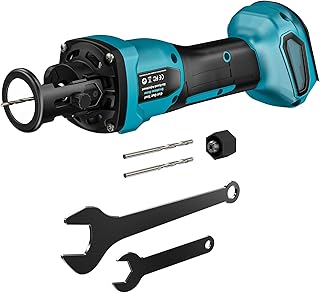


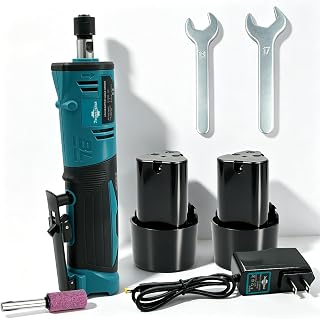


Choosing a cordless die grinder is less about finding the tool with the highest advertised specification and more about matching the grinder to the work, accessories, battery platform and working environment. For Canadian buyers, the Makita 18V LXT platform is particularly relevant because the Canadian lineup includes established cordless die grinder models such as the DGD800Z and DGD801Z. Makita Canada lists both models with a 1/4-inch collet and a no-load speed of 26,000 RPM.
A good buying decision should therefore consider more than RPM. Collet compatibility, grinder shape, overall length, weight, switch arrangement, battery requirements, accessory limits, ventilation and operator control can make a significant difference during real work. The right model for automotive preparation may not be the right choice for fabrication, deburring, polishing or detail grinding.
Makita's Canadian cordless die grinder range currently centres on the DGD800 and DGD801 families. They share several important specifications, but their physical configurations make them useful for somewhat different working situations.
The DGD800Z is an 18V LXT 1/4-inch die grinder with a long-nose configuration. Makita Canada specifies a 26,000 RPM no-load speed, a maximum wheel diameter of 1-7/16 inches (36 mm), an overall length of 15-3/4 inches (402 mm) and a net weight of 3.1 lb (1.4 kg). The listed design features include anti-restart protection, a low-battery indicator, redirected ventilation and an ergonomic rubber grip.
The extended nose can be useful when the accessory needs additional reach around or beyond a workpiece. This can make the DGD800Z worth considering for users who frequently work in recessed areas where a conventional short body may be less convenient.
The DGD801Z uses the same 18V LXT platform and 1/4-inch collet format but adopts a compact short-nose design. Makita Canada lists an overall length of 12-1/8 inches (307 mm), a net weight of 2.5 lb (1.1 kg), a 26,000 RPM no-load speed and a maximum wheel diameter of 1-7/16 inches (36 mm).
The shorter configuration can be attractive when control, compactness and precision matter more than additional reach. For work in confined areas, the reduced length may make positioning easier.
These two models should not be treated simply as identical grinders with different model numbers. Their nose designs influence how the tool behaves around the workpiece.
High rotational speed is one of the defining characteristics of a die grinder. The Makita DGD800Z and DGD801Z are specified at up to 26,000 RPM without load.
However, maximum no-load speed should not be interpreted as a guarantee that the grinder will maintain that speed under every load. The actual result depends on the accessory, material, pressure applied by the operator, battery condition and the nature of the task.
RPM also needs to be considered alongside accessory ratings. A mounted wheel, burr or other accessory must be appropriate for the grinder's operating speed and intended application. Never select an accessory solely because its physical dimensions appear compatible.
A fast grinder can remove material efficiently, but excessive pressure can reduce control and place unnecessary stress on the accessory. For detailed grinding, the operator should use controlled contact rather than forcing the tool into the material.
This is especially important when using carbide burrs or small abrasive accessories. The grinder is designed for high-speed rotary work, but the accessory determines much of the cutting behaviour.
Both the DGD800Z and DGD801Z are listed with a 1/4-inch (6.35 mm) collet capacity.
The collet is one of the most important compatibility points to check before purchasing accessories. A grinder does not become universally compatible with every rotary accessory simply because the accessory can physically be inserted into the tool.
Always verify the accessory manufacturer's instructions, maximum rated speed, shank diameter and intended material before use.
Both DGD800Z and DGD801Z belong to Makita's 18V LXT system. The tool-only versions listed by Makita Canada do not include the battery or charger.
This distinction matters when comparing prices across retailers. A seemingly inexpensive tool-only listing may represent a different overall purchase cost from a kit containing batteries and a charger.
If you already own compatible Makita 18V LXT batteries and a charger, a tool-only configuration can be a practical way to expand an existing collection. If you are starting from scratch, calculate the complete system cost rather than comparing the bare-tool price alone.
Battery condition also affects the practical experience. A grinder working under sustained load can consume considerably more energy than a tool used intermittently for short finishing operations. For longer jobs, having a charged spare battery can be more useful than focusing solely on the highest-capacity battery available.
Makita Canada lists the DGD800Z at 3.1 lb and the DGD801Z at 2.5 lb as net tool weights.
The difference may appear modest on paper, but hand fatigue can become more noticeable during prolonged grinding, especially when the tool is held away from the body or used overhead.
Remember that the battery adds to the complete working weight. The battery size, accessory and work position should therefore be considered when evaluating ergonomics.
Makita describes both models with an ergonomic soft rubber grip intended to improve handling and vibration absorption.
A secure grip is important because die grinders are precision-oriented tools. The objective is not simply to apply force but to maintain stable contact between the accessory and workpiece.
The physical configuration is one of the clearest distinctions to consider when comparing Makita's cordless die grinders.
Neither configuration is automatically the best for every user. The workpiece should determine the preferred geometry.
Die grinders are commonly considered for tasks such as deburring, cleaning up edges, preparing metal surfaces and working around components where a larger grinder is difficult to position. The compact rotary format can provide greater control than a large angle grinder for small areas.
For automotive applications, accessory selection is particularly important. Different materials and finishing requirements call for different accessories, and the accessory's speed rating must be appropriate for the tool.
Fabricators can use die grinders for edge preparation, weld cleanup, surface preparation and detail work. A cordless configuration eliminates the power cord, which can be helpful when moving around a fabrication area.
However, a die grinder is not a replacement for every larger grinder. Heavy stock removal may be better suited to equipment designed specifically for higher material-removal demands.
Deburring is one of the situations where the combination of high speed and a small accessory can be useful. The operator can work around individual edges and openings without necessarily removing large amounts of material.
For precision deburring, choose an accessory that matches the required finish and use light, controlled passes.
A die grinder can be useful for localised grinding and preparation where a larger grinding wheel would be unnecessarily bulky. The small working area makes it possible to address specific points rather than broad surfaces.
Makita lists an anti-restart feature on the DGD800Z and DGD801Z. This feature is designed to help prevent an unintended start when the switch is locked on during battery replacement.
Both models include a low-battery capacity indicator according to Makita's Canadian specifications.
This can help the operator recognise when the battery needs attention rather than discovering the limitation unexpectedly during a task.
Makita states that the vent slots direct exhaust toward the opposite side of the operator on these models.
Ventilation should not be blocked during use. Keeping the tool's air passages clear is an important part of routine maintenance.
The main advantage of cordless equipment is mobility. There is no power cable trailing behind the tool, which can simplify movement around vehicles, fabrication benches and workpieces.
A cordless die grinder can also be convenient where access to a suitable electrical outlet is limited. The trade-off is the need to manage battery charging, runtime and battery inventory.
A corded die grinder can remain attractive for users who work continuously in one location and prioritise uninterrupted operation. Makita's Canadian catalogue also includes corded die grinder models, so buyers who do not need cordless mobility should compare the two categories rather than assuming battery-powered is always superior.
These tools perform overlapping but different roles. A die grinder generally uses a smaller accessory and is better suited to detailed work, internal areas and localised material removal. An angle grinder typically uses a larger wheel and is better suited to broader cutting, grinding and surface work.
A rotary tool and a die grinder can appear similar because both accept small rotary accessories. Their intended workloads, physical designs and operating characteristics can differ significantly.
A die grinder is generally the more appropriate category when the work requires a dedicated high-speed grinding tool and a 1/4-inch accessory system. A smaller rotary tool can be more appropriate for delicate hobby, craft or very light-duty work.
High RPM looks impressive, but it does not tell you whether the tool's geometry, weight or accessory compatibility suits your application.
If you already own batteries, platform compatibility can substantially affect the total cost and convenience of ownership.
Check whether the listing includes batteries and a charger. Makita's DGD800Z and DGD801Z Canadian tool-only listings specify that batteries and chargers are sold separately.
Always confirm that an accessory is designed for the tool and has an appropriate maximum operating speed. Never assume that every 1/4-inch accessory is suitable for a high-speed die grinder.
A long-nose model is not automatically better than a short-nose model. Think about the physical access required by your most frequent jobs.
Compare the tool weight together with the battery and accessory rather than looking only at the bare-tool specification.
Start by identifying the three tasks you perform most often. If those tasks require reach into recessed areas, a long-nose configuration such as the DGD800Z may deserve closer consideration. If compactness and a lighter tool are more important, the DGD801Z may be the more logical configuration.
Next, determine whether you already use the Makita 18V LXT battery platform. If you do, the tool-only format may be particularly convenient. If you do not, include the required battery and charger in your budget.
Finally, identify the accessories you expect to use. Confirm the shank diameter, maximum accessory speed, recommended application and material compatibility before making a purchase.
High-speed rotary tools require appropriate protective equipment and careful operating technique. Eye protection is particularly important because grinding and cutting operations can produce flying particles.
Online listings can use similar product names while representing different configurations. Before ordering, compare the complete model number rather than relying on a product photograph or shortened title.
Makita product names can include suffixes that identify different packages or configurations. For example, Makita Canada lists the DGD800Z as a tool-only 18V LXT die grinder, while the DGD800RFE represents a kit configuration that includes batteries, charger and carrying equipment.
This is an important distinction when comparing listings from different Canadian retailers. Always compare like-for-like packages before deciding which offer represents better value.
For August 2026, the most sensible approach is to compare the currently listed Canadian specifications and then verify the exact retailer package before purchase. Makita Canada's current product information identifies the DGD800Z and DGD801Z as 18V LXT cordless die grinders, with the DGD800Z using a long-nose design and the DGD801Z using a short-nose design.
Rather than assuming that the newest-looking listing is automatically the best, compare configuration, compatibility, ergonomics and intended application. Availability and pricing can change, so check the current retailer listing immediately before ordering.
A cordless die grinder may not be the best choice if your work primarily involves large grinding surfaces, heavy cutting or extended high-load operations. In those situations, an angle grinder or another purpose-built tool may provide a better match.
Likewise, if your work is extremely light and involves delicate hobby applications, a smaller rotary tool may provide more appropriate control.
There is no single best model for every Canadian buyer. The DGD800Z and DGD801Z address different ergonomic priorities. The DGD800Z uses a long-nose design, while the DGD801Z uses a compact short-nose configuration. Your preferred reach, working space and tool weight should determine the better choice.
Yes. Both are listed by Makita Canada as 18V LXT cordless die grinders.
Both the DGD800Z and DGD801Z are listed with a 1/4-inch (6.35 mm) collet.
Makita Canada specifies a no-load speed of 26,000 RPM for both models.
The Canadian DGD801Z listing is a tool-only configuration, with batteries and charger sold separately.
The DGD800Z listing from Makita Canada is also a tool-only configuration, with batteries and charger sold separately.
According to Makita Canada's listed net weights, the DGD801Z is 2.5 lb (1.1 kg), while the DGD800Z is 3.1 lb (1.4 kg).
Yes. Makita lists the DGD800Z at 15-3/4 inches (402 mm) overall and the DGD801Z at 12-1/8 inches (307 mm).
No. The accessory must be suitable for the grinder, have the correct shank dimensions and be rated for the required operating speed and application. Always follow the accessory manufacturer's instructions.
If you already own compatible Makita 18V LXT batteries and a charger, a tool-only model may be convenient. If you are new to the platform, compare the complete cost of the grinder, battery and charger against available kits.
A cordless die grinder can be appropriate for professional applications when its specifications, accessory system and operating characteristics match the work. Professional suitability depends on the job rather than the cordless label alone.
The strongest choice depends on how and where you intend to use the tool. The Makita DGD800Z and DGD801Z both provide an 18V LXT cordless platform, 1/4-inch collet and 26,000 RPM no-load speed, but their physical configurations are different. The DGD800Z provides a longer body and additional reach, while the DGD801Z prioritises a shorter, lighter configuration.
For Canadian buyers in 2026, the most useful comparison is therefore not simply “which Makita die grinder has the highest performance?” Instead, consider which configuration provides the best combination of access, control, battery compatibility, accessory compatibility and ergonomics for your particular work. Verify the exact Canadian listing, package contents, current price and retailer terms before purchasing.