

Explore cordless power tools, kits, batteries, chargers, accessories and related equipment available to Canadian shoppers. Compare product options and follow useful buying guides before you buy.






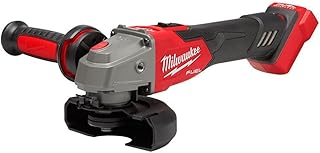

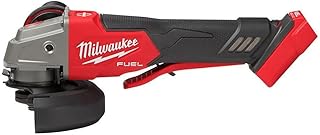

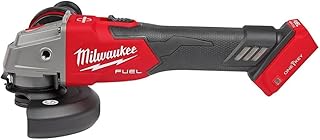


Choosing the right Milwaukee cordless die grinder is less about finding the most powerful model and more about matching the tool to the work. Metal fabrication, automotive repair, weld cleanup, deburring, surface preparation and detail grinding can require very different combinations of speed, access, runtime and control.
Milwaukee's cordless die grinder range spans compact M12 models and higher-output M18 FUEL models. The current lineup includes straight and right-angle configurations, variable-speed options, braking models and versions designed around different switch and accessory requirements. Official Milwaukee specifications confirm that the M12 FUEL 1/4-inch straight and right-angle models are designed around compact access, while M18 FUEL die grinders target higher sustained performance and demanding material-removal applications.
For Canadian buyers, the most useful comparison is therefore not simply “M12 versus M18.” Consider the type of accessory you use, how much clearance you have around the workpiece, how long the grinder normally runs between battery changes, whether variable speed is important and whether a braking or tool-management feature has practical value for your work.
These products should not automatically be treated as ten completely different tool designs. Several are tool-only and kit configurations of related platforms. That distinction matters because a kit can be a better purchase for a new Milwaukee user, while a tool-only model can make more sense when compatible batteries and chargers are already available.
The M12 and M18 platforms serve different priorities. M12 models are attractive when compact size, lower hand fatigue and access around crowded components matter. M18 models are generally the more appropriate starting point when sustained grinding and heavier material removal are central to the job.
The correct choice depends on the workload rather than the battery voltage alone. A compact M12 grinder can be the more practical tool when access is the limiting factor, while an M18 model can be preferable when the amount of material being removed is the limiting factor.
Tool geometry can make a larger difference than a small difference in motor output. Straight die grinders place the spindle along the body of the tool. This shape can provide a natural grip for many general grinding and deburring operations.
Right-angle models reposition the working end relative to the motor and handle. That configuration can be useful when the workpiece has restricted access or when a straight body would interfere with surrounding components.
RPM is important, but maximum RPM should not be the only specification you compare. Different accessories and materials can require different operating speeds. A grinder with adjustable speed can therefore offer more practical control than a model judged only by its maximum rotational speed.
For example, Milwaukee's M12 FUEL right-angle 3485-20 uses four-mode speed control, while the M18 FUEL 2984-20 provides five speed settings across a stated 8,000 to 20,000 RPM range. The M18 2939-20 is designed around a substantially higher 27,000 RPM maximum.
Always check the accessory manufacturer's permitted operating speed before installation. The grinder's maximum speed does not mean every burr, wheel, brush or sanding accessory is suitable for that speed.
Variable speed becomes particularly useful when one grinder is expected to perform several different jobs. A single fixed-speed approach can be effective for repetitive work, but adjustable control gives the operator more flexibility.
Milwaukee FUEL die grinders use POWERSTATE brushless motor technology. Brushless construction eliminates conventional motor brushes as a wearable component and is intended to support durability and efficiency. Milwaukee also pairs its FUEL tools with REDLINK PLUS electronic intelligence and REDLITHIUM battery technology.
For buyers, the practical point is that brushless technology is most valuable when the grinder is used regularly. If the tool is only used occasionally for small finishing jobs, other characteristics such as size, price and battery compatibility may have a greater influence on the overall buying decision.
Battery choice affects more than runtime. Battery size also changes the balance and overall handling of the tool. A larger battery can be useful for extended work, while a smaller pack may be preferable when the tool is being held in awkward positions.
Do not assume that the largest available battery is automatically the best choice. The ideal battery is the one that balances runtime, weight, tool clearance and comfort for the actual job.
Milwaukee sells cordless die grinders in both tool-only and kit configurations. The choice is straightforward if you already own compatible batteries and a charger: a tool-only package can prevent unnecessary duplication.
If you are entering the M12 or M18 platform for the first time, a kit may provide better practical value because it can include the required battery, charger and other equipment. The M18 FUEL 2784-22, for example, includes two XC5.0 batteries, a multi-voltage charger and a 1/4-inch collet.
Before buying a kit, compare its complete contents against the batteries and accessories you already own. A lower-priced tool-only listing can become more expensive overall if you then need to purchase batteries and charging equipment separately.
The grinder is only one part of the system. The accessory determines what material can be removed and how the tool behaves against the workpiece.
Milwaukee states that its M18 FUEL 2784 model accepts 1/4-inch shank accessories and is designed for carbide burrs and flap wheels within specified accessory sizes. The newer M12 right-angle 3485-20 is also designed around 1/4-inch shank accessories.
Collet compatibility is one of the easiest specifications to overlook. A grinder designed around a 1/4-inch collet is intended for compatible 1/4-inch shank accessories. That does not mean every accessory with a matching shank is automatically suitable.
Before purchasing accessories, check four things: shank size, maximum rated RPM, intended material and permitted use. Also inspect the accessory for damage before installation.
Modern cordless grinders can include electronic safety and control features that are worth considering separately from raw grinding performance. Milwaukee's RAPIDSTOP technology is included on selected M18 die grinders, including the 2984-20 and 2939-20. Milwaukee states that the 2984-20 uses braking in under two seconds and that the 2939-20 also uses RAPIDSTOP braking in under two seconds.
A braking feature does not eliminate the need for proper operating technique. Users should still maintain a secure grip, use the correct accessory, follow the tool manual and wear appropriate personal protective equipment.
Switch design influences how the grinder feels during repeated use. A paddle switch can be convenient for users who prefer controlling the tool through a hand position that keeps the switch readily accessible. A slide switch can suit users who prefer a different grip and activation method.
The Milwaukee M18 FUEL 2984-20 combines a paddle switch with variable speed, braking and ONE-KEY functionality, while the M18 FUEL 2939-20 uses a slide-switch configuration.
There is no universally correct switch style. If possible, evaluate the switch location, grip shape and activation method before committing to a model for long-duration work.
ONE-KEY can be particularly relevant for contractors, service companies and users managing multiple tools. Milwaukee's M18 FUEL 2984-20 supports ONE-KEY tracking and tool management, allowing the tool to connect with a smartphone for tracking and management functions.
For an individual homeowner who owns one grinder, this feature may not justify choosing one model over another. For a professional operation with multiple tools moving between vehicles, workshops and jobsites, inventory management can have much greater practical value.
A die grinder is frequently used with the hands close to the workpiece. That makes ergonomics especially important. A theoretically powerful tool can become less productive if it is uncomfortable to hold or difficult to position accurately.
Look for a grip that feels secure without excessive squeezing. Consider the trigger or switch position, battery placement, balance, access to the collet and visibility of the accessory. Right-angle models can offer advantages around confined components, while straight models can feel more natural for certain open-surface applications.
Automotive technicians commonly use die grinders for tasks such as deburring, weld cleanup, gasket-surface preparation, rust removal and other controlled material-removal jobs. Compact right-angle models can be especially useful where suspension, engine-bay or body components restrict access.
For automotive work, avoid choosing exclusively on maximum RPM. Access, control, battery size and the ability to select an appropriate speed can matter just as much. The M12 right-angle platform is specifically positioned by Milwaukee around service-mechanic access requirements.
Fabricators often need a different combination of characteristics. Weld cleanup and material removal can place greater demands on sustained power and battery capacity. In these applications, an M18 FUEL die grinder may be more appropriate than a compact M12 model.
The M18 FUEL 2784-20 is designed around 20,000 RPM and sustained grinding applications, while newer M18 models such as the 2939-20 are aimed at higher-output material removal with a stated 27,000 RPM maximum.
A simple comparison process can narrow the choices quickly. Start with the job rather than the product name.
Good maintenance helps preserve performance and reduces avoidable wear. Always follow the manufacturer's instructions for the exact model because maintenance requirements can differ between tools.
Die grinders operate at high rotational speeds and can generate sparks, fragments, dust and significant noise. Appropriate eye and face protection, hearing protection and suitable work clothing should be selected according to the application and applicable workplace requirements.
Use guards and protective equipment specified for the accessory and tool. Keep bystanders away from the immediate work area when appropriate. Secure the workpiece rather than attempting to hold a loose component by hand. Maintain a stable stance and keep the rotating accessory away from clothing and other objects that could become entangled.
Do not exceed the accessory's rated speed. Never modify a grinding accessory to make it fit a tool. Read the current tool and accessory instructions before operation, particularly when using cutting wheels, abrasive products or wire brushes.
Long-term value comes from the combination of performance, compatibility and usability. A grinder that fits an existing battery ecosystem can be more economical over time than starting another platform. Similarly, a compact model that solves access problems may provide more practical value than a larger model with specifications that are rarely needed.
Consider how frequently the grinder will be used, how demanding the applications are, how many batteries you already own and whether the tool will be shared among several users. For professional use, features such as braking, electronic protection and tool tracking can also influence the overall ownership decision.
For compact general-purpose work, the M12 FUEL 1/4-inch Straight Die Grinder is a logical model to investigate. Its three-mode speed control and compact cordless design make it relevant to users who value mobility and control.
For confined automotive and mechanical work, an M12 FUEL right-angle model deserves close attention. The 3485-20 combines a right-angle design with four-mode speed control, spindle lock and LED work lighting.
For heavier grinding and sustained material removal, the M18 FUEL range is the stronger starting point. The 2784-20 provides a 20,000 RPM brushless platform, while the 2984-20 adds variable speed, braking, a paddle switch and ONE-KEY management.
For users prioritizing high-speed material removal, the M18 FUEL 2939-20 is another model to compare, with a stated 27,000 RPM maximum and RAPIDSTOP braking.
There is no single best model for every user. The best choice depends on the application, required access, battery platform, accessory type and desired features. M12 models favour compact access, while M18 FUEL models provide options for more demanding grinding applications.
M12 FUEL die grinders can be a strong choice for compact grinding, deburring and access-focused applications. Milwaukee offers both straight and right-angle M12 configurations, including models with multiple speed settings.
The M18 platform is generally intended for higher-output applications, but battery voltage alone does not determine whether a tool is better for a particular task. Tool design, motor characteristics, accessory size, speed control and application all matter.
Several Milwaukee cordless die grinders are designed for 1/4-inch shank accessories. Always confirm the exact model specification before buying accessories because compatibility depends on the tool and accessory requirements.
Yes, selected models are particularly relevant to automotive service applications. Right-angle M12 FUEL models are designed around compact access, making them useful for work in restricted spaces.
Choose tool-only if you already own compatible batteries and a charger. Choose a kit when you need the battery and charging equipment or when the included package provides better overall value for your setup.
Variable speed is valuable when the grinder is used with different accessories or on different materials. It gives the operator greater control than a single fixed-speed setting. However, it is less important for repetitive work where the same accessory and operating speed are used consistently.
Brushless motors can offer advantages in durability and efficiency by eliminating conventional motor brushes. Milwaukee uses POWERSTATE brushless technology throughout its FUEL die grinder range.
Check the exact model number, battery platform, accessory compatibility, maximum accessory speed, speed-control options, switch design, tool geometry, package contents and current retailer information. Also compare whether the tool-only or kit configuration better matches your existing equipment.
The best Milwaukee cordless die grinder for your Canadian workshop or jobsite is the model that matches the work rather than the one with the longest specification list. Start by identifying the material, accessory, working space and expected workload. Then decide between M12 and M18, straight and right-angle designs, fixed or variable speed and tool-only or complete kit configurations.
For compact access, the M12 FUEL family deserves attention. For demanding grinding and material removal, the M18 FUEL range offers higher-output choices. If productivity, control and safety features are priorities, models with variable speed, RAPIDSTOP and ONE-KEY may warrant the additional comparison.
Before placing an order, verify the exact model number and current specifications with Milwaukee and the retailer listing, especially when comparing tool-only products with kits. Product configurations, included batteries and availability can change. The most reliable buying decision comes from matching the tool to your actual applications, existing Milwaukee battery platform and required accessories rather than relying on a generic “best” ranking.