

Explore cordless power tools, kits, batteries, chargers, accessories and related equipment available to Canadian shoppers. Compare product options and follow useful buying guides before you buy.


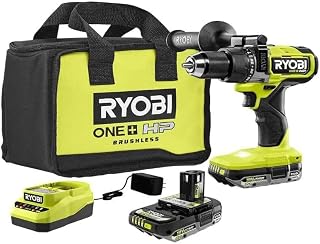


Choosing a Ryobi cordless SDS hammer drill is not simply about selecting the model with the highest advertised power. The right tool depends on the type of masonry you drill, the diameter and depth of the holes you normally make, how frequently you work without an outlet, and how much weight you are comfortable carrying. Canadian buyers should also consider battery compatibility, charger requirements, cold-weather storage, replacement accessories and the availability of compatible SDS bits.
Ryobi has built a broad cordless ecosystem around its battery platforms, which can make an SDS rotary hammer particularly attractive when you already own compatible batteries and chargers. However, not every cordless hammer drill serves the same purpose. A compact model can be convenient for occasional anchors and small masonry jobs, while a larger SDS rotary hammer may be better suited to repeated drilling in concrete, brick or block.
Before choosing from the products featured on this page, compare the complete specifications rather than relying only on product titles. Pay attention to voltage platform, impact energy, operating modes, maximum drilling capacity, tool weight, chuck system, battery configuration and included accessories. Specifications can vary between kits and bare-tool versions, so confirm the exact configuration before purchasing.
An SDS hammer drill or rotary hammer is designed specifically for work in masonry and concrete. The SDS chuck allows compatible bits to slide into the tool while remaining securely retained during impact operation. This differs from a conventional keyed or keyless drill chuck, which is primarily intended for standard drill bits and rotational drilling.
The term SDS commonly refers to a specialized bit-retention system. Depending on the tool, you may encounter SDS-Plus or another SDS configuration. The chuck determines which accessories can be used, so checking compatibility before buying drill bits is essential.
A conventional hammer drill creates an impact effect through a mechanical hammering mechanism within the drill chuck. An SDS rotary hammer generally uses a more dedicated impact mechanism and is designed around masonry drilling. That difference becomes increasingly important when drilling larger holes or working with dense concrete.
Impact energy is one of the most important specifications for an SDS rotary hammer. It indicates how much energy is delivered through the hammering mechanism during each impact. Higher impact energy can be useful for demanding masonry drilling and chiseling, but maximum impact energy should not be treated as the only measure of tool quality.
For small wall anchors, occasional brickwork and light-duty projects, an extremely powerful tool may be unnecessary. For repeated concrete drilling or chiseling, a more capable rotary hammer can make the work more efficient. Match the impact specification to the diameter and material you expect to encounter.
No-load speed describes how quickly the bit rotates when the tool is operating without resistance. A higher speed can be useful for certain drilling applications, but masonry performance depends on the interaction between rotation, impact mechanism, bit design and material.
Variable-speed control can be valuable because it gives the operator more control when starting a hole or working with different materials. Smooth speed adjustment is often more useful than simply selecting the tool with the highest maximum RPM.
Blows per minute, often abbreviated as BPM, describes the frequency of impacts generated by the hammer mechanism. A high BPM figure does not automatically mean a tool will outperform every competitor. Impact energy and the overall hammer mechanism must be considered alongside BPM.
Maximum drilling capacity tells you the largest recommended hole size for specified materials and applications. Treat this specification as a practical limit rather than a target for every job.
If you regularly install concrete anchors, conduit, pipework or other fixtures, think about the hole sizes you actually use. A tool that comfortably handles your normal hole diameter may be preferable to a heavier model designed for substantially larger holes.
Cordless convenience comes with a trade-off: the battery contributes to the overall weight. A bare tool may look relatively compact, while the working configuration with battery and bit can feel significantly different.
Weight matters particularly when drilling overhead, working from ladders, installing fixtures repeatedly or performing extended renovation work. For occasional heavy drilling, additional weight may be acceptable. For frequent overhead work, a lighter configuration can be much easier to control.
Battery compatibility is a major factor when selecting a Ryobi cordless SDS hammer drill. If you already have compatible Ryobi batteries and a charger, a bare-tool purchase may reduce duplication. If you are entering the battery platform for the first time, compare the complete kit against the cost and convenience of purchasing the required battery and charger separately.
Battery capacity is normally expressed in amp-hours. A higher-capacity battery can provide greater runtime, although it may also increase the tool's weight. The ideal battery therefore depends on whether your priority is runtime, portability or balance.
Canadian conditions make battery handling especially relevant. Lithium-ion batteries should be used, stored and charged according to the manufacturer's instructions. Very cold batteries may not perform normally, and charging conditions can also be subject to temperature limitations specified by the manufacturer.
Do not assume that leaving batteries in an unheated vehicle throughout winter is equivalent to normal indoor storage. Follow the battery manufacturer's recommendations for storage temperature, charging and transportation. Keeping batteries protected from extreme conditions can also make the cordless system more predictable when you need it.
An SDS rotary hammer is only as useful as the accessories selected for the job. SDS masonry bits are designed to work with the tool's chuck and hammer mechanism. Bit quality affects drilling speed, hole accuracy, durability and the amount of effort required from the operator.
For routine concrete drilling, choose bits intended for the material and hole diameter required. For larger holes, specialized masonry accessories may be necessary. Chiseling applications also require compatible SDS chisels rather than ordinary drill bits.
Never force an accessory beyond its recommended application. Check the manufacturer's compatibility information for the tool and accessory before use.
Different Ryobi SDS tools can offer different operating modes. Understanding those modes helps you avoid buying more capability than you need or, conversely, choosing a model that lacks an important function.
Drill-only operation uses rotation without the hammering action. This can be useful for compatible materials and applications where impact is unnecessary. Always follow the tool's instructions regarding acceptable bits and materials.
Hammer drilling combines rotation and impact. It is the primary mode for drilling many masonry and concrete holes with an SDS rotary hammer.
Some SDS rotary hammers provide a chiseling mode in which the impact mechanism operates without normal rotary drilling. This can be useful for selected light demolition, tile removal and material-removal tasks when the tool is specifically designed for them.
If chiseling is an important requirement, confirm that the exact Ryobi model includes this mode. Do not assume every SDS hammer drill has identical functionality.
Motor technology can influence efficiency, runtime, heat generation and maintenance characteristics. Brushless motors eliminate traditional motor brushes and are commonly used in modern cordless power tools. Brushed motors use replaceable brushes that wear over time.
A brushless Ryobi model can be attractive to buyers who prioritize modern motor technology and cordless efficiency. However, motor type should still be considered alongside impact energy, ergonomics, battery system, intended workload and price.
A powerful rotary hammer can become uncomfortable if its balance does not suit the user or application. Examine the handle arrangement, grip shape, trigger placement and battery position when comparing models.
For horizontal concrete drilling, a balanced tool can make it easier to maintain consistent pressure. For overhead work, total weight becomes even more important. Auxiliary handles can improve control and should be used whenever the manufacturer recommends them.
Rotary hammers generate significant mechanical impact, so vibration can be an important consideration during extended use. Features intended to reduce vibration can improve comfort, but they do not eliminate the need for appropriate work practices and protective equipment.
If your projects involve repeated concrete drilling or chiseling, compare the manufacturer's stated vibration information where available. Consider the duration of individual tasks as well as the total amount of work you expect to perform.
Concrete drilling can cause sudden bit binding, dust generation and strong reaction forces. Some cordless rotary hammers incorporate electronic protection or clutch-related features designed to help manage certain operating conditions. The exact protection system varies by model.
Always read the manual for the specific tool. Wear appropriate eye and hearing protection, use suitable respiratory protection when required by the material and working environment, and secure the work area before drilling.
When drilling concrete or masonry, dust management is particularly important. Depending on the task, a suitable dust-extraction system or compatible vacuum arrangement can help reduce airborne dust. Follow applicable Canadian workplace and safety requirements for professional environments.
Voltage is useful for understanding a cordless platform, but it does not provide a complete picture of drilling performance. Compare impact energy, BPM, speed, capacity, weight and intended application as well.
A listing can refer to a bare tool even when product images show a battery. Confirm exactly what is included before comparing prices between retailers.
A heavy-duty rotary hammer can be unnecessary for someone who only needs to drill a few small anchor holes each year. Extra capacity can increase weight and cost without providing meaningful advantages for occasional tasks.
The opposite mistake can be frustrating. If you routinely drill large holes into hard concrete, a compact entry-level model may not provide the capability or comfort you need.
Do not calculate the total purchase cost without considering accessories. If you need several SDS bits and chisels, include them in your overall budget.
Ryobi offers multiple cordless tool platforms and battery configurations. Always verify compatibility with the exact model rather than assuming every battery bearing the Ryobi name will fit.
Ryobi is particularly appealing to buyers who want access to a broad cordless ecosystem and a range of tools for home improvement, maintenance and general workshop tasks. However, buyers may also compare Ryobi with brands such as Milwaukee, DeWalt, Makita and Bosch.
Milwaukee is widely associated with professional-oriented cordless systems and extensive trade-focused tool ranges. DeWalt has a large cordless ecosystem covering construction and workshop applications. Makita offers a broad selection of professional power tools and battery platforms. Bosch is another established manufacturer with extensive drilling and rotary hammer experience.
The best choice depends on the battery ecosystem you already own, the type of work you perform, tool availability, ergonomics and specifications. A professional brand is not automatically the best choice for every homeowner, just as a consumer-oriented model is not necessarily suitable for intensive daily construction work.
Users performing continuous heavy-duty commercial drilling should pay particularly close attention to duty cycle, impact performance, vibration characteristics, service considerations and the manufacturer's intended application for the selected model.
An SDS rotary hammer is not a universal replacement for every drill. If most of your work involves wood, metal, cabinetry or ordinary fastening, a standard cordless drill or impact driver may be more appropriate.
A conventional hammer drill can also be sufficient for occasional small masonry holes. An SDS rotary hammer becomes more compelling as hole size, concrete hardness, drilling frequency and chiseling requirements increase.
If your primary task is installing small anchors in brick, block or masonry, prioritize manageable weight, easy bit changes and adequate hammer-drilling performance rather than maximum demolition capability.
For repeated concrete anchors, compare impact energy, drilling capacity and compatible SDS bits. A tool with appropriate power can help maintain productivity without requiring excessive physical force.
Larger holes place greater demands on both the tool and accessory. Check the manufacturer's recommended drilling capacity and use the appropriate bit diameter and type.
If tile removal or light material removal is part of your work, look for a model with a dedicated hammer-only or chiseling mode. Confirm that the manufacturer's documentation supports the intended application.
When evaluating the featured Ryobi models, use the same criteria for each product. A consistent comparison makes it easier to distinguish meaningful differences from minor specification variations.
Customer reviews can provide useful information, but they should not be treated as a substitute for specifications. Look for repeated comments about battery runtime, chuck operation, balance, trigger control, durability and suitability for specific applications.
Pay attention to reviews that explain what the buyer actually used the tool for. A homeowner drilling occasional holes in brick has different requirements from a contractor drilling concrete throughout the working day.
Also distinguish between reviews of the bare tool and reviews of a complete kit. Battery size, included accessories and charger configuration can influence the buyer's experience.
Prices can change frequently, so compare the current configuration rather than relying on an old advertised price. Check whether the listing includes the battery, charger, case, auxiliary handle and accessories.
A lower bare-tool price is not necessarily cheaper if you need to purchase a battery and charger separately. Conversely, a kit may be less attractive if you already own several compatible batteries.
Before purchasing, compare the current total cost, retailer terms, included accessories and the exact model number. Taxes, promotions and regional availability can also affect the final amount paid in Canada.
Routine care can help keep a rotary hammer operating reliably. Always follow the manufacturer's maintenance instructions for the exact model.
Worn or damaged masonry bits can reduce drilling performance and increase the effort required from the operator. Inspect the cutting end before each significant project. If a bit becomes visibly damaged, excessively worn or unsuitable for the required hole, replace it rather than attempting to force it through the material.
Using the correct bit diameter and type is also important. A poor accessory choice can make a capable rotary hammer appear underpowered.
The best model depends on the work you need to perform. Compare impact energy, drilling capacity, operating modes, weight, battery compatibility and included accessories. A compact model may be preferable for occasional DIY work, while a more powerful SDS rotary hammer can be better for frequent concrete drilling or chiseling.
Ryobi SDS rotary hammers are designed for masonry and concrete applications within the limits specified for each model. Check the manufacturer's drilling capacity and recommended applications before using a particular model for hard or large-diameter concrete drilling.
Some models include a drill-only mode, while others may have different operating configurations. Check the exact model's instructions before using it with non-SDS accessories. An SDS rotary hammer is primarily designed around compatible SDS accessories.
An SDS rotary hammer uses a dedicated SDS accessory-retention system and impact mechanism designed for masonry applications. A conventional hammer drill normally uses a standard drill chuck and produces a different type of hammering action. SDS rotary hammers are generally better suited to more demanding masonry drilling and compatible chiseling applications.
Many cordless SDS rotary hammers are designed for concrete drilling, but capability varies considerably between models. Check impact energy, maximum drilling capacity and the manufacturer's recommended application before selecting a tool for a particular concrete job.
A brushless motor can provide advantages in efficiency and motor design, but it should not be the sole purchase criterion. Compare motor type with impact performance, weight, battery platform, operating modes and your intended workload.
Buyers who already own compatible Ryobi batteries may prefer a bare tool. New users may find a kit more convenient if it includes the appropriate battery and charger. Compare the complete cost of the configuration you actually need.
The appropriate battery depends on the balance between runtime and weight. A larger-capacity battery can provide more operating time but may add weight. For overhead work, a lighter battery can improve handling, while demanding drilling may benefit from greater capacity.
Some SDS rotary hammers support chiseling and can be suitable for compatible light tile-removal applications. Confirm that the exact model has a hammer-only or chiseling mode and follow the manufacturer's instructions for the task.
Battery operation and charging should follow the manufacturer's specified temperature and storage requirements. Avoid assuming that a lithium-ion battery can be charged or stored in extreme cold without restrictions. Consult the battery documentation before winter use.
The best Ryobi cordless SDS hammer drill for a Canadian buyer is the model that fits the actual workload rather than the one with the most impressive specification on paper. Start with your material, hole diameter and frequency of use. Then compare impact energy, drilling capacity, operating modes, weight and battery requirements.
If you already use compatible Ryobi cordless tools, the battery ecosystem can be an important advantage. If you are starting from scratch, compare the total cost of the complete system and consider whether another professional or consumer-oriented platform better matches your needs.
Before making a final purchase decision, verify the exact model number, battery configuration, included accessories, current specifications and retailer information. Product configurations and prices can change, so the most useful comparison is always based on the specific listing you intend to purchase rather than a generic product family name.
For Canadian shoppers in 2026, a careful specification comparison can help identify the right balance of cordless convenience, drilling performance, runtime, portability and long-term usefulness. Use the recommendations on this page as a starting point, then confirm the details that matter most for your own projects before buying.