
♥ Wishlist


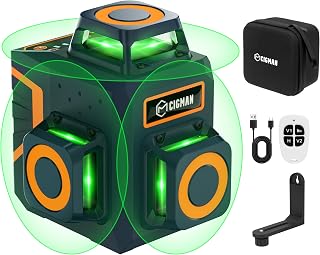

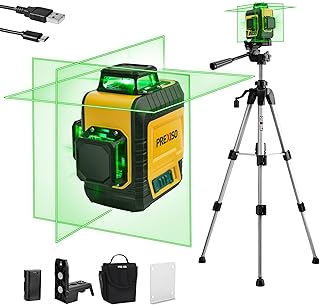


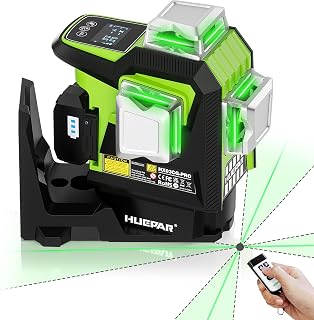
A Ryobi line laser level can be a practical addition to a Canadian homeowner's, DIYer's or tradesperson's tool collection when accurate visual references are needed across a wall, room or work area. Instead of repeatedly transferring a level reference from one point to another, a line laser projects a visible reference directly onto the working surface. Depending on the model, this may include a horizontal line, vertical line or intersecting lines for more versatile layout work.
When choosing a Ryobi line laser level, start with the type of projects you expect to handle. A homeowner working on pictures, shelves or small fixtures may value a compact design and simple operation, while someone installing cabinets or completing frequent renovations may place greater importance on accuracy, mounting flexibility and projection options. Professional users should also consider durability, operating conditions, working range and battery logistics before making a purchase.
Horizontal projection is particularly useful for establishing consistent heights for cabinets, shelving, wall decorations, fixtures and other installations. A vertical line can assist with plumb alignment for doors, trim and wall layouts. Models offering both horizontal and vertical references can provide greater versatility when a single tool is expected to handle several types of work. However, additional projection features are most useful when they match your actual applications.
Self-leveling can simplify setup by allowing the internal mechanism to establish a level or plumb reference when the tool is positioned within its specified leveling range. This can save time compared with manually adjusting a traditional level for every reference point. Buyers should still check the manufacturer's stated self-leveling range and understand the tool's indication when it is positioned outside that range. Self-leveling does not compensate for every type of uneven or unstable setup.
Accuracy is one of the most important specifications when a laser will be used for cabinetry, tile layouts, trim, framing or other precision work. Pay attention to how the manufacturer states accuracy and the distance associated with the measurement. Two products should not be compared solely by looking at the numerical accuracy figure if the measurement distances differ.
Visibility is a separate consideration. Laser lines can appear differently depending on ambient lighting, surface colour, working distance and the laser technology used. Green lines may be easier for the human eye to perceive in some conditions, while red laser systems can work well for many indoor applications. Canadian buyers should consider whether the laser will mainly be used inside a home, in a bright garage, workshop or other demanding environment.
For cordless users, battery compatibility can be an important advantage. If you already use compatible Ryobi tools, a laser that works with the same battery platform may simplify charging and battery management. However, do not assume that every Ryobi product uses the same battery configuration. Always verify the exact model requirements and whether the listing includes a battery and charger or represents a tool-only package.
Mounting options also deserve attention. Tripod compatibility can make it easier to establish a stable reference at a particular height, while magnetic or dedicated mounting systems can be useful when working on suitable surfaces. A secure mounting position is essential because even a highly accurate laser can produce an unreliable layout if the tool moves during use.
A Ryobi line laser level can support a wide range of projects. During cabinet installation, a horizontal line can provide a consistent visual reference across a wall. For shelving, it can help keep multiple mounting points aligned. When hanging several pictures or mirrors, a laser can simplify the process of establishing a common height. Vertical projection can also assist with door, trim and wall layouts. During renovations, one versatile laser may support several stages of a project, from initial layout to final installation.
Canadian shoppers should compare the complete specification rather than choosing a laser solely by price or brand. Look at projection type, accuracy, self-leveling range, visibility, working range, power source, battery compatibility, mounting interface and included accessories. Package contents are particularly important because some listings may include a battery, charger, bracket, tripod or case while others may be tool-only.
It is also worth considering the environment in which the laser will be used. Indoor renovation work typically has different requirements from a dusty construction area or frequently transported jobsite tool. Check the manufacturer's information for operating conditions, environmental protection and storage recommendations rather than assuming that every compact laser is designed for demanding construction use.
A line laser does not replace careful measurements or sound installation practices, but it can make repeated alignment tasks easier to visualize. The best model depends on the project, not simply on having the highest advertised range or the largest feature list. For occasional home projects, ease of setup and practical visibility may be the priorities. For more demanding installation work, accuracy, mounting stability and versatility may deserve greater weight.
Before relying on a laser for precision work, inspect the housing, lens and mounting system, follow the manufacturer's operating instructions and check the tool if it has experienced a significant impact. Store it appropriately and keep the laser lens clean. With the right combination of accuracy, visibility, mounting flexibility and power compatibility, a Ryobi line laser level can provide a convenient reference for a broad range of alignment and layout projects.
Find the right Ryobi line laser level for renovation, installation, DIY and workshop projects across Canada. Line laser levels create clear horizontal or vertical reference lines that can make alignment tasks faster and more consistent. Whether you are installing cabinets, positioning shelves, hanging multiple fixtures, setting trim or planning a renovation layout, choosing a laser with the right projection, accuracy, visibility and mounting options can make a noticeable difference. Compare the features that matter most before selecting a model for your project.